Updated 4/16/24
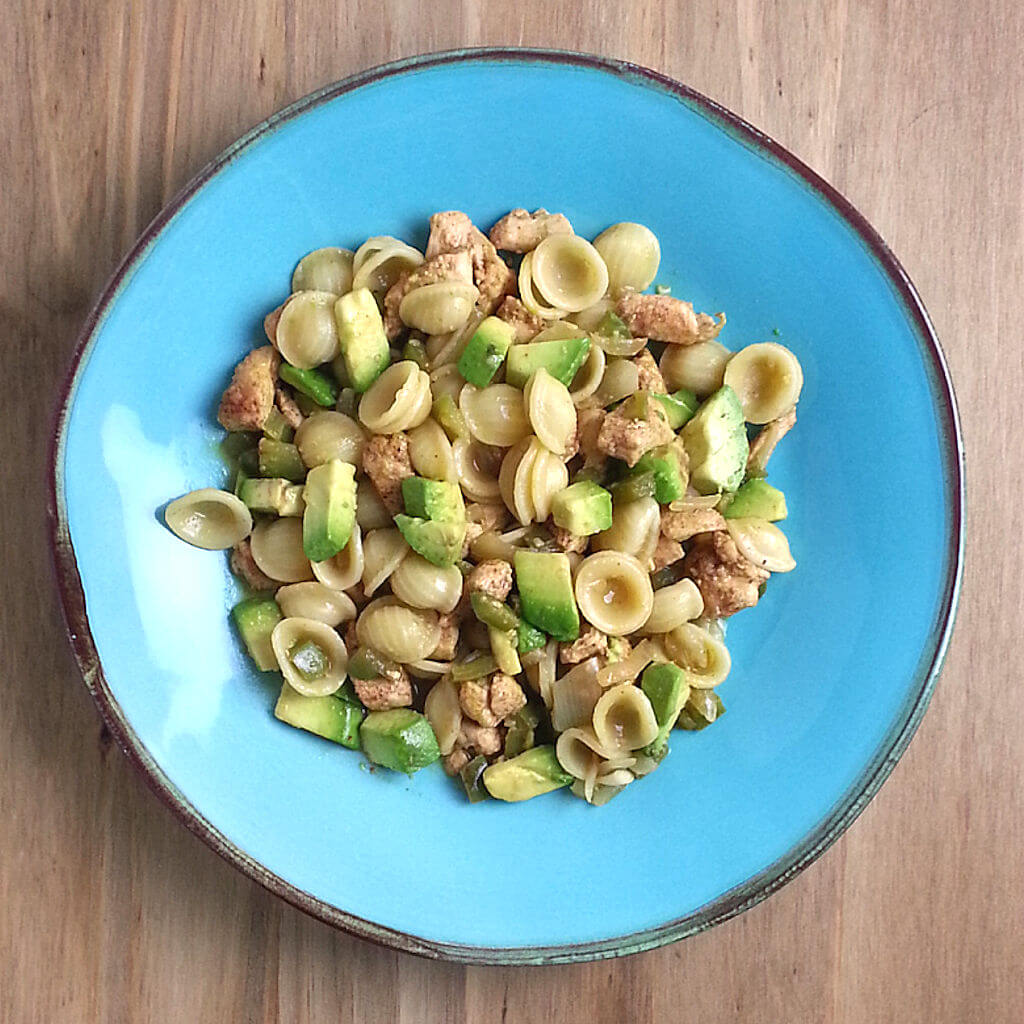
Cooking pasta for two works best when every ingredient has a purpose, and that is exactly what happens here. Orecchiette has that pleasant shape that catches little bits of sauce and mix-ins, the chicken adds savory comfort, and the avocado brings richness without needing a heavy cream sauce. The combination feels balanced and modern, which makes it especially nice for a smaller dinner.
This is the kind of recipe that sits comfortably between weeknight practical and a little bit special. It gives you a full meal in one bowl, suits a table for two beautifully, and avoids the heavy leftovers that sometimes come with pasta dishes. Orecchiette with Chicken and Avocado is cozy, but still bright enough to feel fresh.
Since the individual pieces in this pasta are relatively small, I couldn’t stop wondering how you would eat this pasta? With knife and fork, knife and spoon, spoon and fork? How do you eat your pasta? I prefer a fork over a spoon, even with small pasta forms. With a fork your bites are smaller. I come from a family of fast eaters, so whatever I can do to slow myself down is a plus. I also feel that it tastes better with a fork – total nonsense, I know, but that’s just what I feel.
This post may contain affiliate links, which means that I make a small commission off items you purchase at no additional cost to you.
Key Ingredients in This Recipe
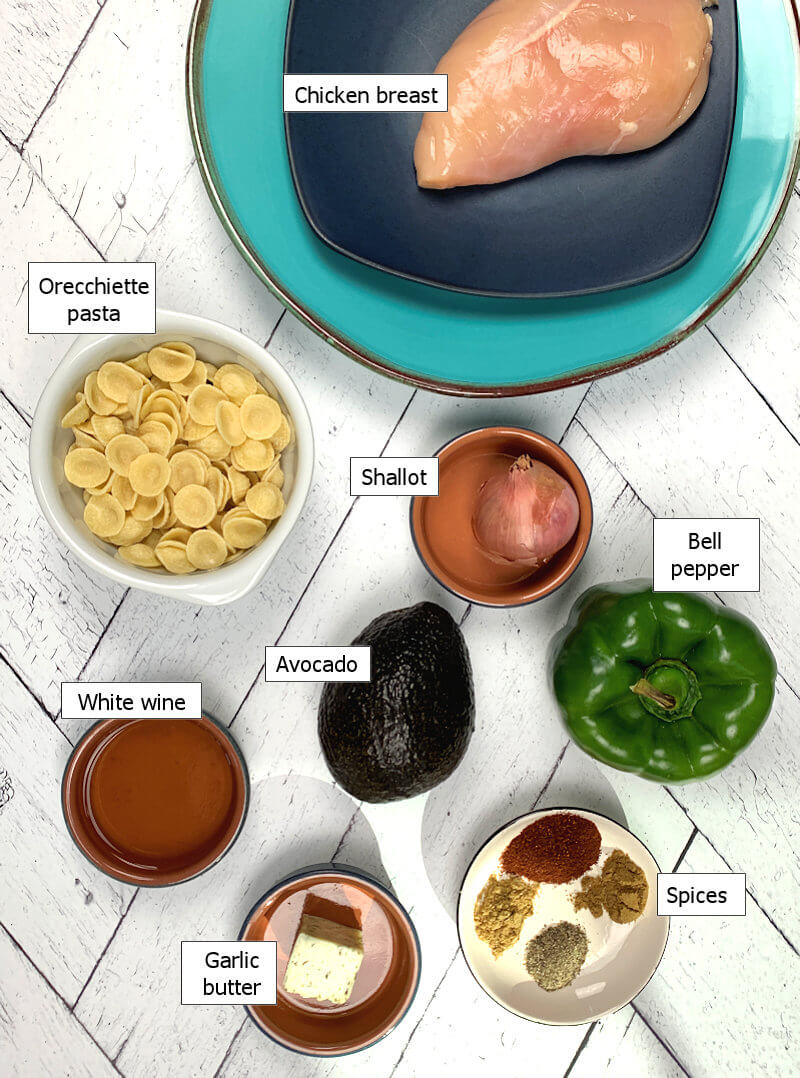
You’ll find the complete list of ingredients and exact quantities in the recipe below.
- Orecchiette pasta
- Chicken breast
- Green bell pepper
- Shallot
- Avocado
- Garlic butter
- White wine
- Spices
How to Make Orecchiette with Chicken and Avocado
There is not much to explain about this Orecchiette with Chicken and Avocado recipe, but I will show you a few steps nevertheless.
- Step 1 – Chop shallot fine and cut the chicken breast, avocado and bell pepper to a size similar as the orecchiette.
- Step 2 – Cook the pasta in salted water, according to the directions on the packaging.
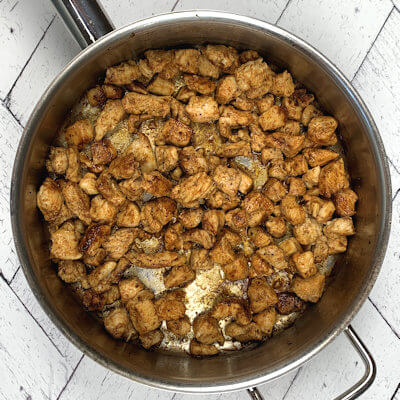
Step 3 – Mix the spices and rub it into the cubes chicken. Cook the chicken in the garlic butter until done. This will take about 5 minutes.
Remove the chicken from the skillet and keep warm.
Step 4 – Add the shallot to the same skillet and cook until translucent. Add the bell pepper at the last minute and cook 1-2 minutes. Make sure it is still snappy.
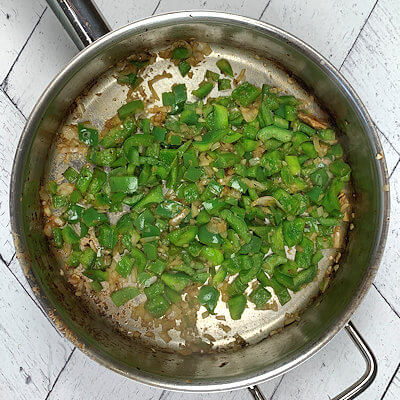
- Step 5 – Add the white wine and mix.
- Step 6 – Add the drained pasta, the chicken and the avocado cubes and mix. You may want to add some pasta water if needed. When all is warm serve and enjoy!
Other Recipes to Try
- Avocado Chicken Salad
- Green Rice Salad with Avocado Grapes and Cucumber
- No Guilt Avocado Spinach Pasta
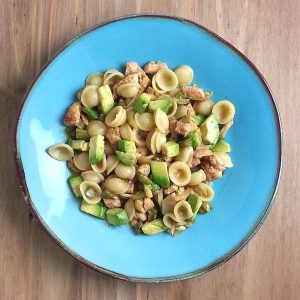
Orecchiette with Chicken and Avocado
Pin Recipe FacebookIngredients
- 1/4 teaspoon coriander
- 1/4 teaspoon cumin
- 1 teaspoon salt
- 1/4 teaspoon chili powder
- 1/4 teaspoon pepper
- 8 ounces chicken breast
- 1 tablespoon garlic and parsley butter
- 4 ounces orechiette pasta
- 1 shallots
- 1/2 green bell pepper
- 3/4 cup white wine
- 1 avocado
Instructions
- Mix the spices, salt and pepper.
- Cut the chicken breast in small cubes and rub the cubes with the salt, pepper and spices.
- Chop shallots fine and cut green bell pepper in cubes, about the same size as the chicken.
- Chop the avocado in cubes, about the same size as the chicken.
- Heat the garlic butter in a pan and cook the chicken, until fully cooked. This will take about 5 minutes.
- Bring water and salt to a boil and add the pasta. Cook the pasta according to the direction on the packaging.
- Take the chicken out of the pan and keep it warm. Add the shallot to the same skillet and cook until translucent.
- Add the bell pepper at the last minute and cook 1-2 minutes. Make sure it is still snappy.
- Add the white wine and warm it in the pan, loosening all brown pieces in the pan.
- Drain the pasta. Add pasta to the pan.
- Add chicken back into the pan, followed by the avocado cubes.
- Toss everything and allow to warm a little. You may want to add some pasta water if needed.
- Season with salt and pepper and serve.
Nutrition
Nutrition information is automatically calculated, so should only be used as an approximation.