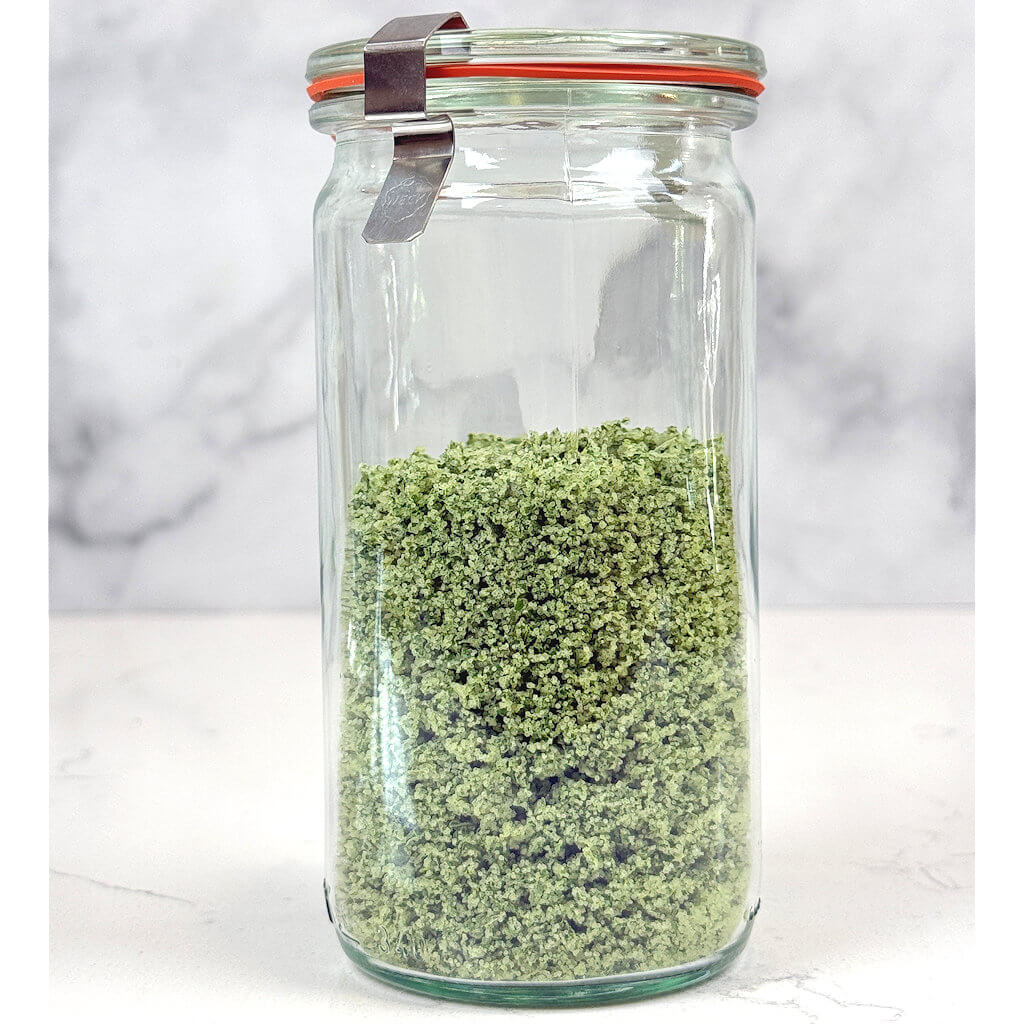
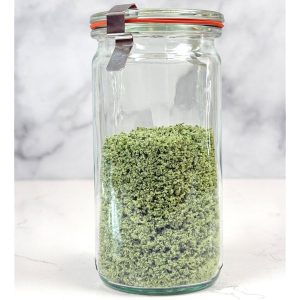
The food processor does the work quickly: basil leaves and coarse salt pulse together until the salt takes on the green of the herb and the mixture smells like a summer kitchen. It goes onto a baking sheet and into a low oven to dry out completely; the moisture in the basil needs to leave before the salt will store properly. Once dry, it can be broken up and kept in a jar. About one cup is the yield, which is generous enough to use freely and small enough that it stays fresh and fragrant rather than sitting forgotten at the back of a spice drawer.
The uses are wide: finishing salt on eggs, pasta, grilled vegetables, pizza or any dish where a pinch of something herbal at the end would make a difference. It also makes a practical and genuinely useful gift, the kind that gets used immediately rather than displayed on a shelf.
Why You’ll Keep Making This
Salt is a natural preservative, it draws moisture out of whatever it comes into contact with, which is why this technique works. The food processor breaks the basil cells and releases the essential oils directly into the salt crystals, which absorb and hold them. The low oven temperature then removes the remaining moisture from the basil without cooking it, high heat high would destroy the volatile compounds that give basil its fragrance. What you’re left with is salt that has permanently absorbed the flavor rather than just being mixed with dried herb, which is why basil salt tastes more like fresh basil than any dried basil product ever does.
This post may contain affiliate links, which means that I make a small commission off items you purchase at no additional cost to you.
Key Ingredients in This Recipe
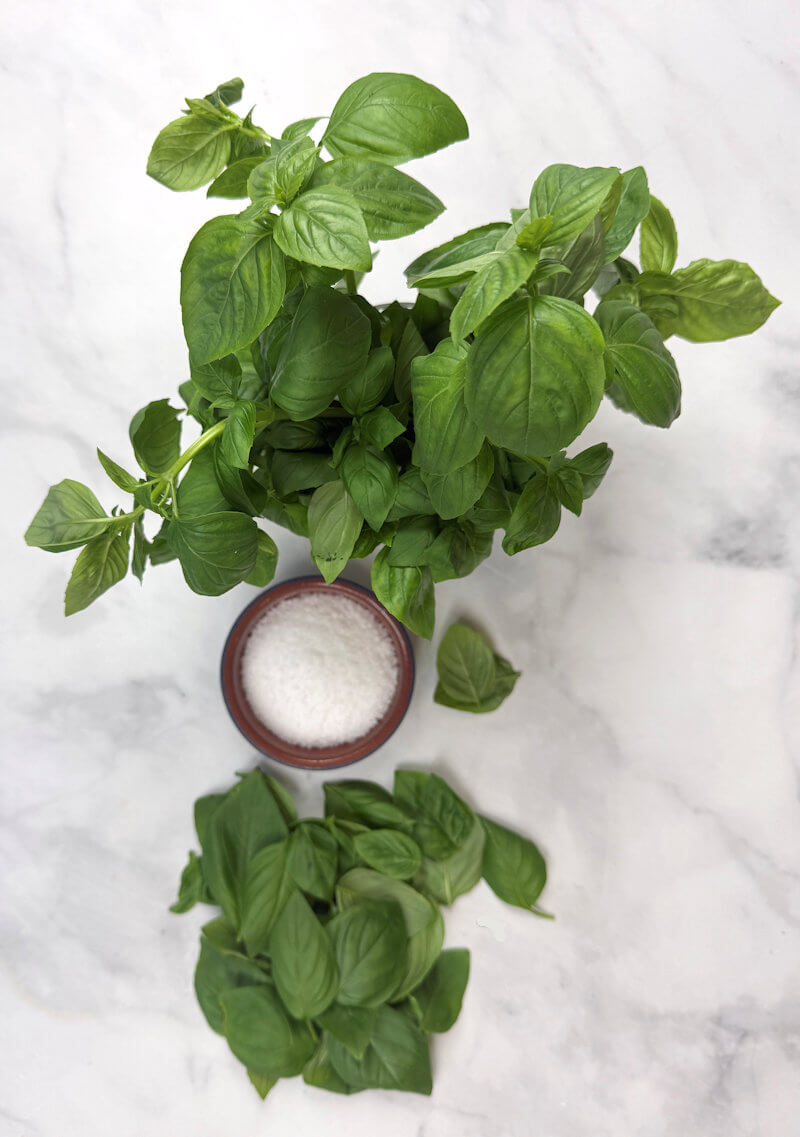
You’ll find the complete list of ingredients and exact quantities in the recipe below.
- Fresh basil leaves
- Coarse salt – this can be kosher or sea salt, but traditional table salt will also work.
Watch this short video below to see how quickly and easily this recipe comes together, so you know what to expect before you start.
How to Make Basil Salt
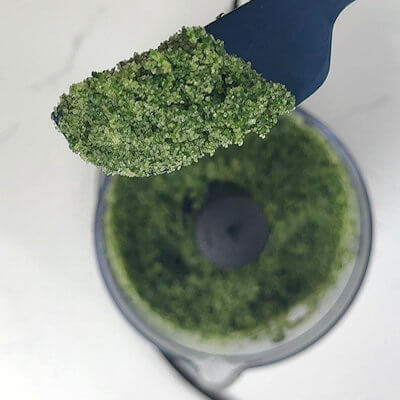
Step 1 – Wash and dry the fresh basil leaves. Transfer the basil leaves and the salt into a food processor and pulse until fine and well mixed.
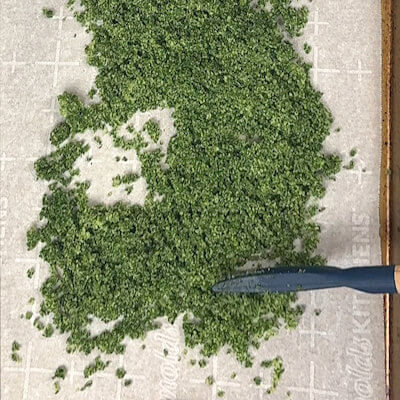
Step 2 – Spread the basil salt in a thin layer onto a baking sheet, lined with parchment paper.
Step 3 – Place the baking sheet in the oven set on 220°F and allow the salt to dry. Check every 10-15 minutes until it is completely dry. Allow to cool.
Once the salt is dry and cooled, you can keep and store it the way it is, or pulse it again in the food processor to get a finer salt.
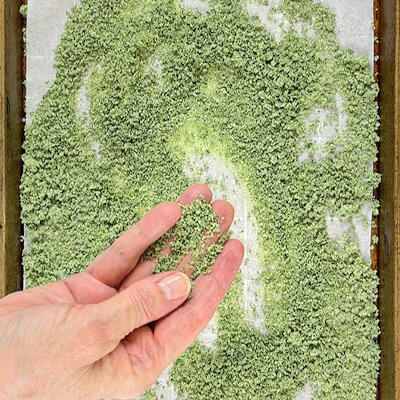
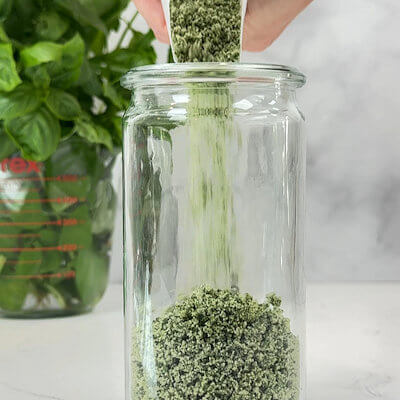
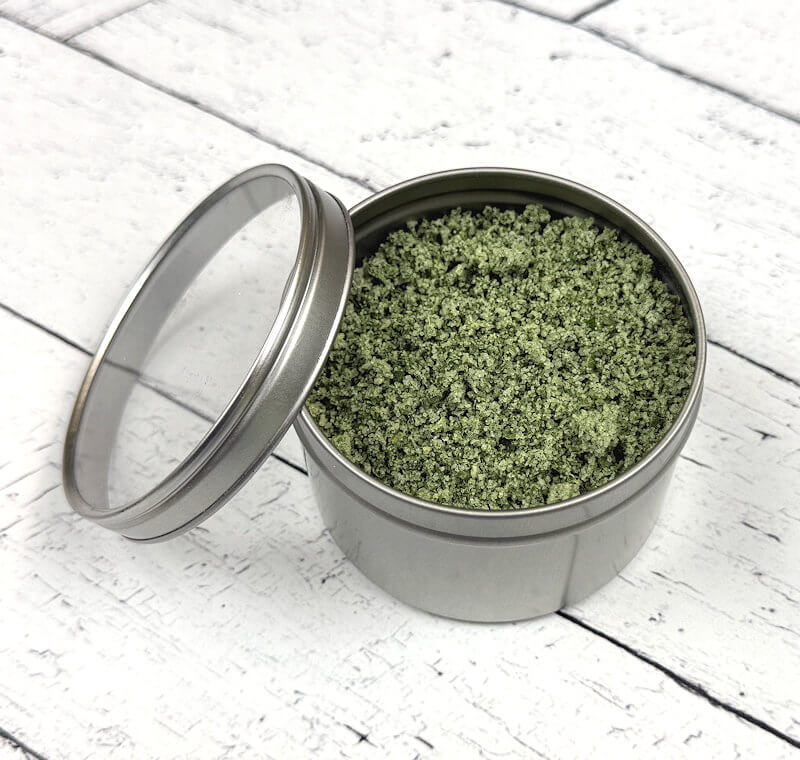
Step 4 – Transfer the salt into an airtight container and store in a dark place.
How to Use Basil Salt
This could become an endless list, as basil and salt and be used in so many recipes, especially the ones with tomato an basil. Here are a few categories:
- Pasta, like Tomato Basil Gnocchi or Orecchiette with Creamy Basil & Blue Cheese Sauce.
- Pizza and savory pies, like Mediterranean Phyllo Pizza Caprese.
- Soups, like Caribbean Citrus Tomato Soup.
- Toast or sandwiches, like Salami Caprese Ciabatta.
- Salads, like Caprese Pasta Salad for Two or Farro, Corn Salad with Peach & Burrata.
- Fish, chicken or any type of protein, like Pine Nut-Crusted Chicken Parmesan or Chicken with Sundried Tomatoes or Grilled Salmon with Wine in Foil.
Alternatives & Substitutes
- You can make an herbal salt out of basically every herb you have at your disposal. Think about parsley, dill, mint, oregano, sage, thyme, cilantro, or rosemary, or try combinations like thyme and rosemary, basil and parsley, cilantro and mint, or parsley and tarragon.
- Any type of salt is possible, but coarse salt has a few advantages: 1. coarse salt has large grains which absorb the herb oils without dissolving instantly, 2. coarse salt is more visible and thus aesthetically pleasing and 3. you can always grind coarse salt finer, but not the other way around.
Frequently Asked Questions
Store it in an airtight container in a dark place (like a kitchen cabinet).
You can keep the salt for about 3 months.
Yes, that may happen over time. Since some commercial salts contain some sort of anti-caking agent, your basil salt may or may not clump together, depending on the salt you used. Rub the clumps between your fingers to break it up.
Yes, you can, but it defeats the purpose. Most of us make basil salt because we have an abundance of fresh basil and want to try to capture the ‘taste of summer’. Mixing dried basil with salt is almost the same as using each individually.
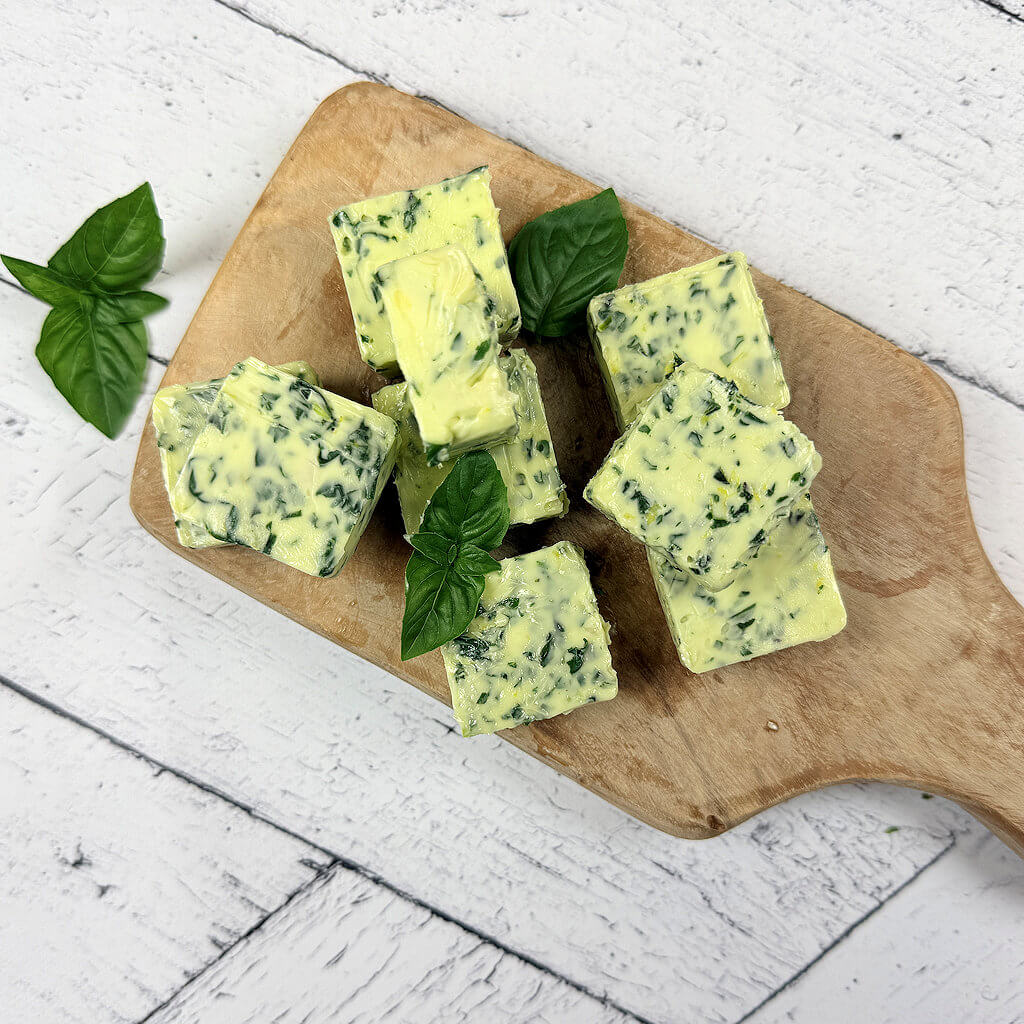
Other Basil Condiments
Basil Salt (small batch)
Pin Recipe Facebook Share by TextIngredients
- 2 cups basil, leaves only
- 1/2 cup coarse salt, sea salt or kosher salt
Instructions
- Wash and dry the fresh basil leaves.
- Transfer the basil leaves and the salt into a food processor and pulse until fine and well mixed. (NOTE 1)
- Spread the basil salt in a thin layer onto a baking sheet, lined with parchment paper.
- Place the baking sheet in the oven set on 220°F and allow the salt to dry. Check every 10 minutes until it is completely dry.
- Allow to cool. (NOTE 2)
- Transfer the salt into an airtight container and store in a dark place.
Notes
- You can use coarse sea salt, kosher salt, and you can even use table salt.
- Once the salt is dry and cooled, you can keep and store it the way it is, or pulse it again in the food processor to a get finer salt.
- The nutritional value of this salt is based on the total amount of the recipe.
Nutrition
Nutrition information is automatically calculated, so should only be used as an approximation.