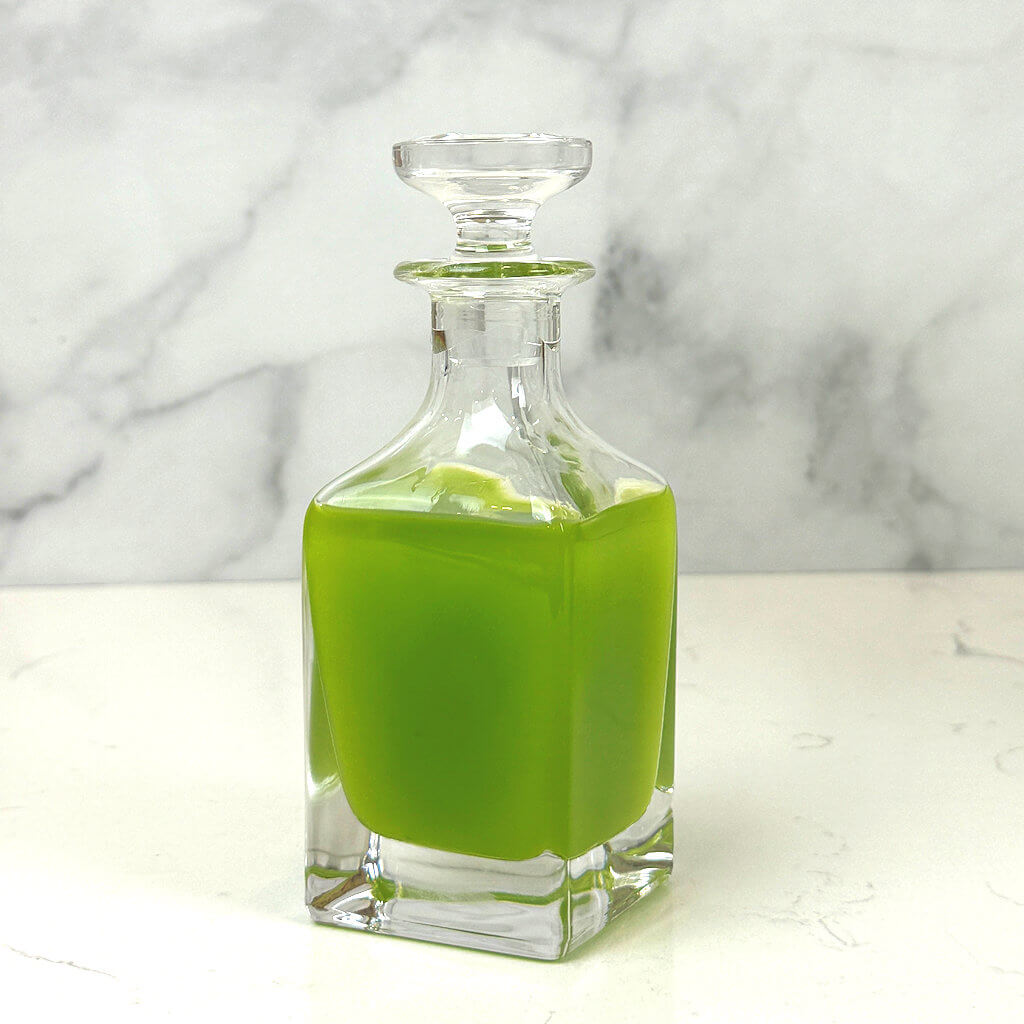
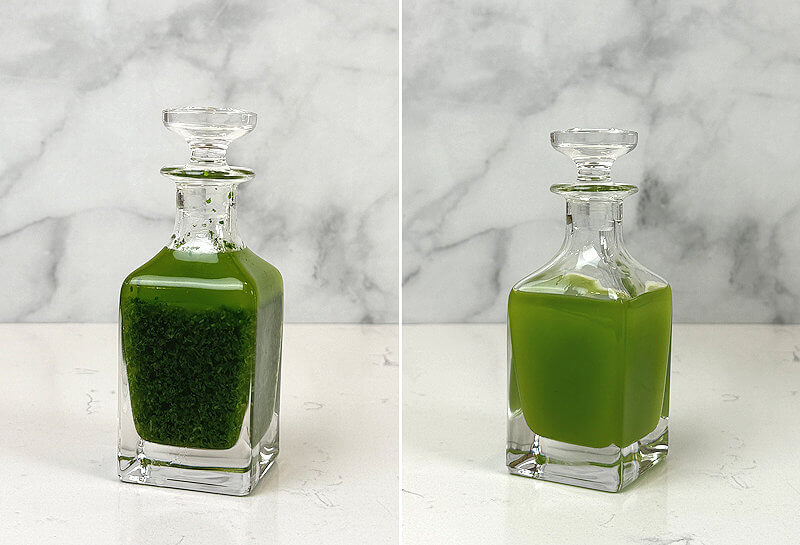
After blanching and cooling, the basil gets squeezed as dry as possible before it meets the oil in the food processor. The pureeing produces a bright green oil with tiny basil pieces throughout, left as is, those pieces will settle to the bottom over time, which is fine and rather beautiful in a jar. Poured through a cheesecloth or coffee filter, the oil comes out completely clean and clear, the kind of professional-looking condiment that looks like it came from a specialty food shop.
Both versions have their uses. The unfiltered oil, stirred before each use, adds texture, color alongside flavor. It’s wonderful drizzled over soup, burrata, or a simple pasta. The filtered version is cleaner and more refined, better suited to plating where the oil is part of the presentation. About one cup is the yield either way, enough to use generously over a couple of days kept in the fridge.
What to Expect
Blanching does two things simultaneously: it wilts the basil so it blends smoothly with the oil, and more importantly it deactivates the enzymes responsible for oxidation, the same process that turns a cut apple brown. Without blanching, those enzymes remain active and the oil turns from vivid green to dull khaki within a few hours. The ice bath immediately after blanching stops any further cooking and locks in the chlorophyll at its most vivid. Squeezing the basil as dry as possible before blending is the step that keeps the oil from becoming diluted with water. Any remaining moisture will cause the oil to separate and shorten its shelf life.
This post may contain affiliate links, which means that I make a small commission off items you purchase at no additional cost to you.
Key Ingredients in This Recipe
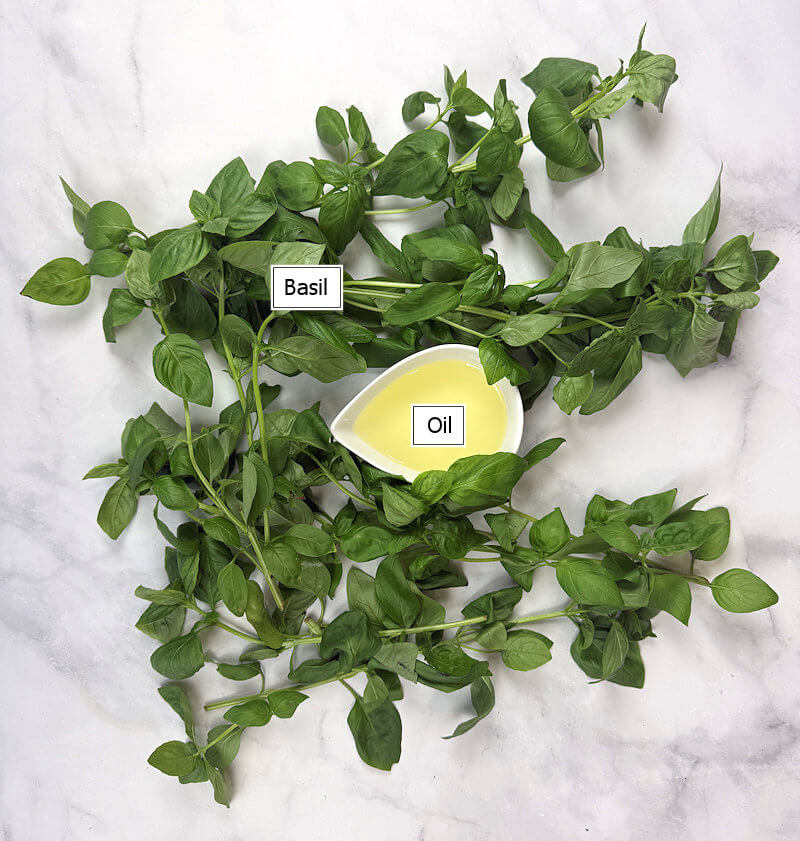
You’ll find the complete list of ingredients and exact quantities in the recipe below.
- Basil leaves
- Neutral oil – or a good quality olive oil.
Watch this quick video below, it gives you a visual guide to the recipe.
How to Make a Small Batch of Basil Oil
Step 1 – Wash basil leaves and blanch them for about 30 seconds in boiling water.
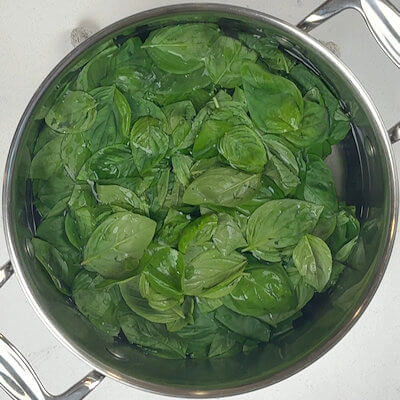
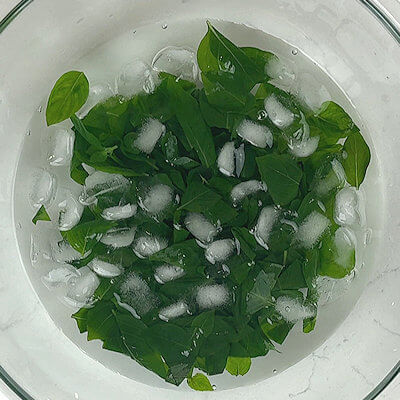
Step 2 – Remove the leaves with a slotted spoon and place them in an ice bath to cool down. Squeeze out as much water as you can and dry with a kitchen or paper towel.
Step 3 – Place the basil leaves in a food processor, pour in the oil and blend together.
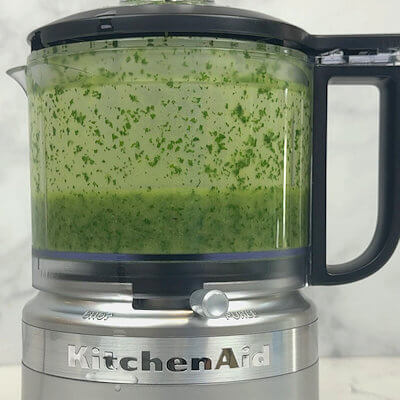
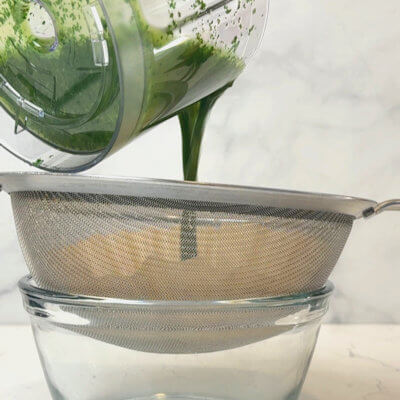
Step 4 – This step is optional.
Pour the basil oil through a fine mesh strainer or sieve or if you want it even cleaner, use a coffee filter or a cheese cloth. Gently press with a spoon to get all the oil out of the mixture.
Pour the filtered or unfiltered basil oil into a glass container and admire your result.
How to Use Basil Oil
Basil oil works wherever you want basil flavor and green color without the bulk of fresh leaves. A few ideas:
- Drizzled over soup — particularly tomato-based soups like the Fresh Summer Tomato Soup.
- Finishing pasta — a drizzle just before serving over the Arugula Malfatti with Pecorino Sauce or any simple pasta.
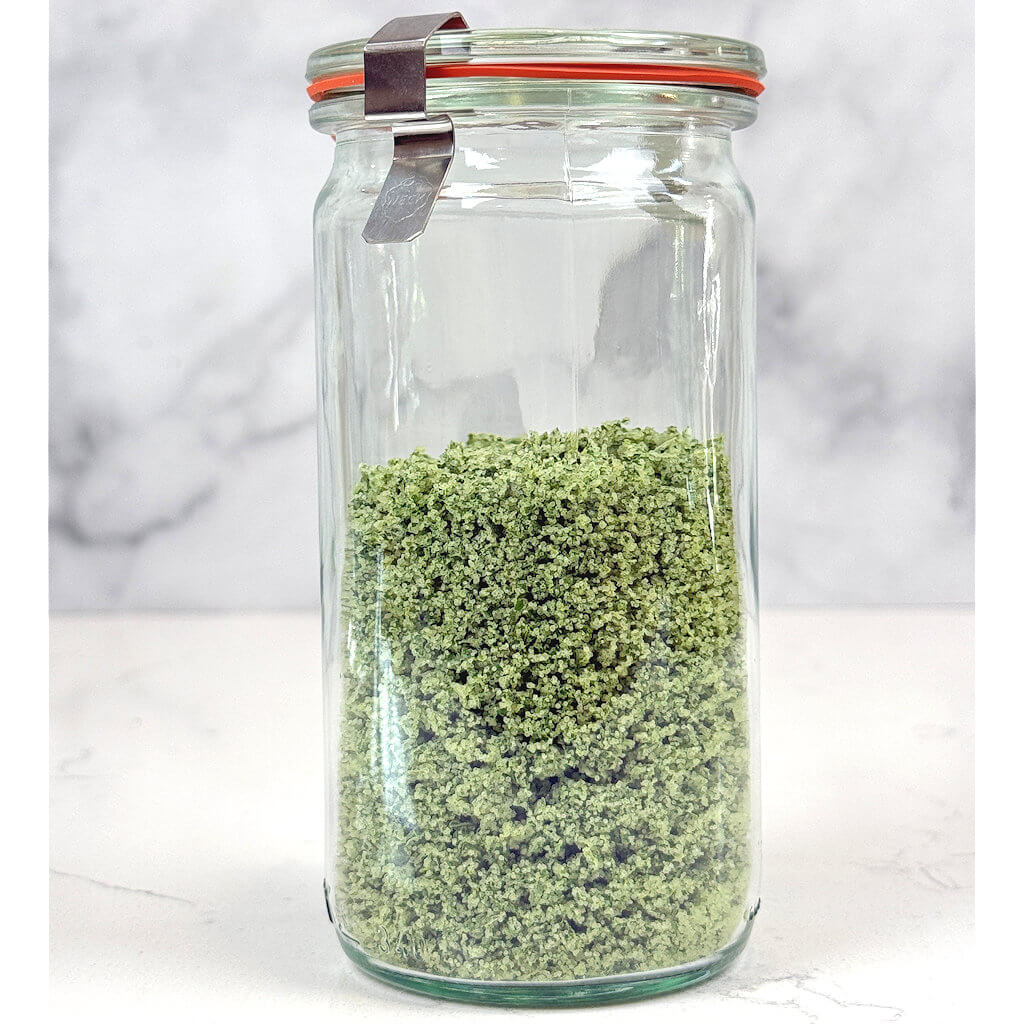
- Over burrata or fresh mozzarella — with the Basil Salt for a double basil finish.
- Pizza and flatbreads — in place of olive oil as a base.
- Grilled fish or chicken — brushed on just before serving.
- Salad dressings — in place of plain olive oil for color and fragrance.
Alternative & Substitutes
- Instead of basil, you could use other soft herbs and create an array of herbal oil. Think of parsley, mint, dill, or cilantro.
- Neutral oil can be replaced with a good quality olive oil; light or bold. You can also think out of the box and use an existing garlic oil or chili oil.
Frequently Asked Questions
Technically no, but skipping the blanching step means the oil will oxidize quickly and turn from vivid green to dull brown within hours. Blanching is what makes it worth making.
That would not be recommended. Dried basil does not give the same effect, it will turn the oil cloudy, and less vibrant.
Store the oil in the fridge and you can keep it for 1-2 weeks max. Please note that the oil may solidify in the fridge and become cloudy. Plain olive doesn’t need to be refrigerated, by the addition of fresh basil oil requires it. A good reason to make multiple small batches instead of one large amount.
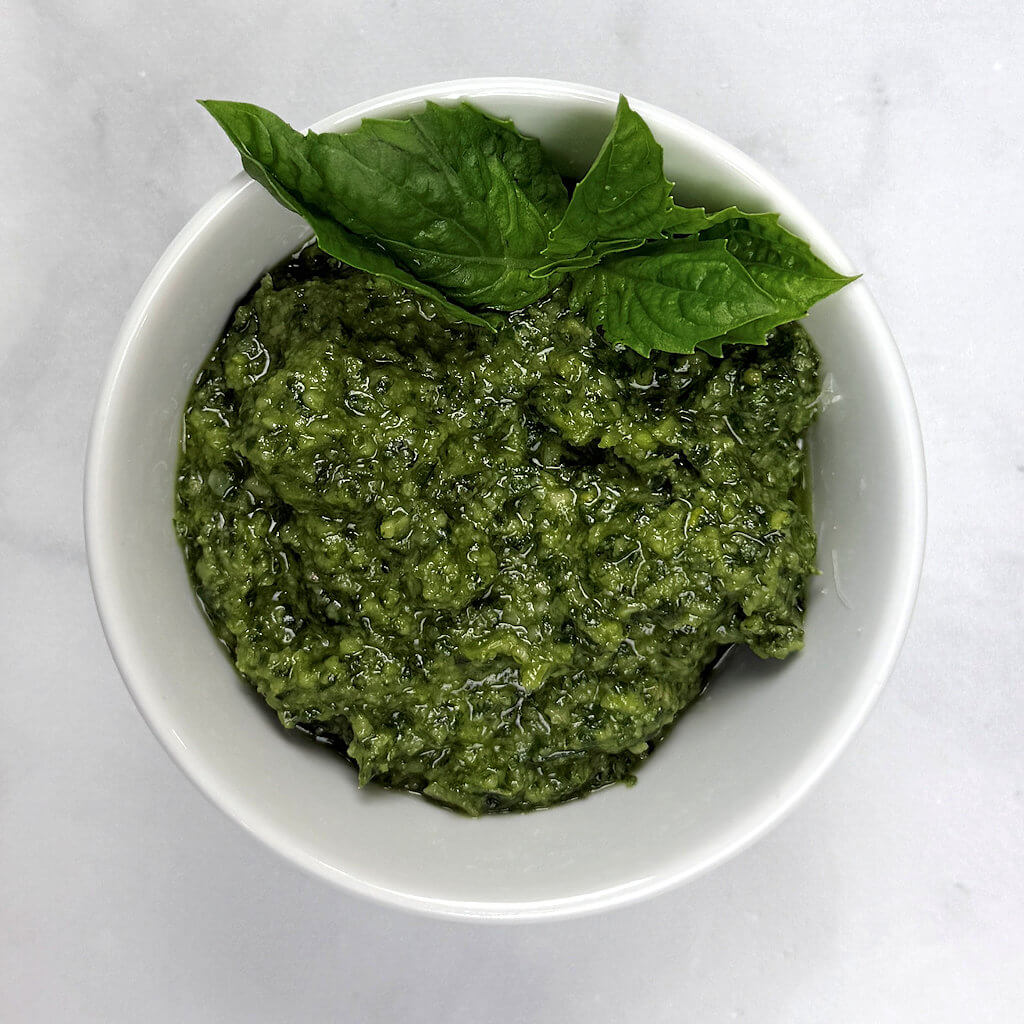
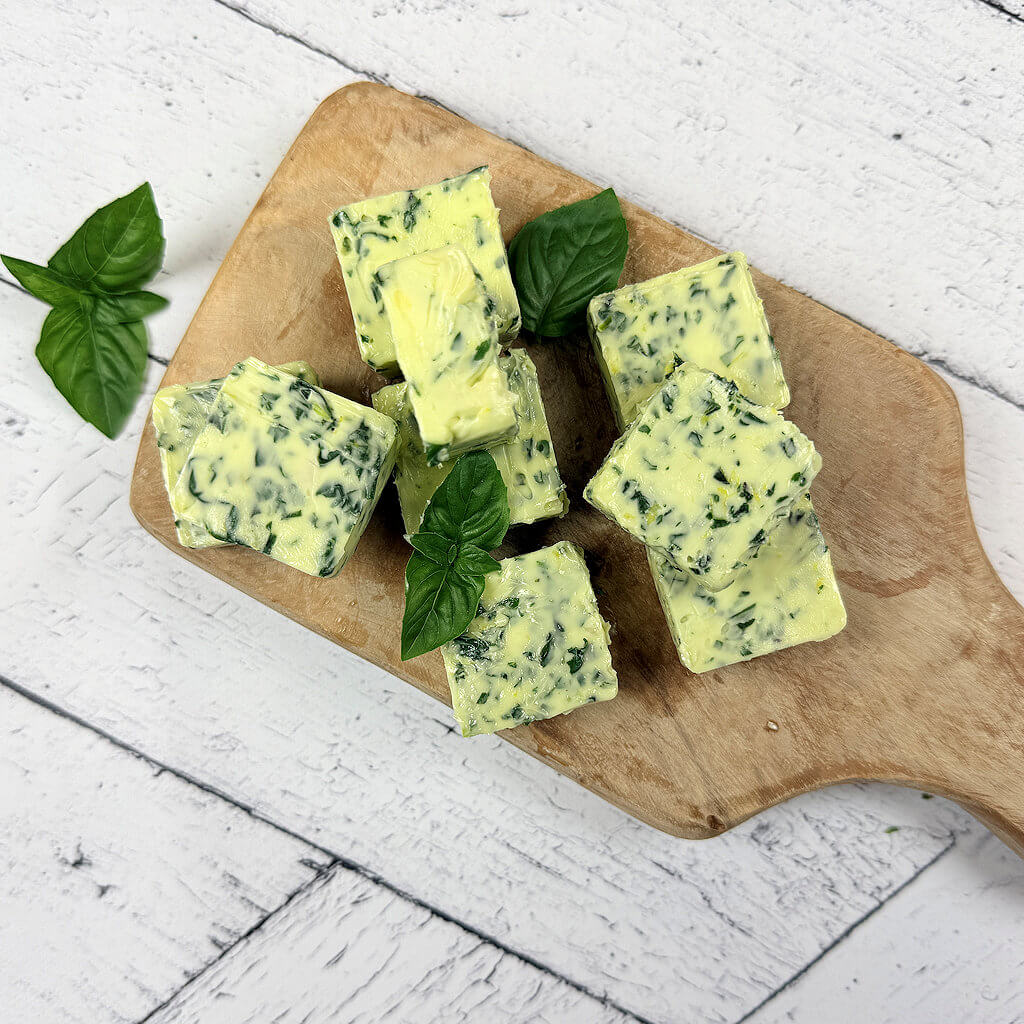
Other Basil Condiments
Basil Oil (small batch)
Pin Recipe FacebookIngredients
- 2 cups basil leaves
- 1 cup neutral oil, or olive oil
Instructions
- Wash basil leaves and blanch them for about 30 seconds in boiling water.
- Remove the leaves with a slotted spoon from the water and place them in an ice bath to cool down. Squeeze out as much water as you can and dry with a kitchen or paper towel.
- Place the basil leaves in a food processor, pour in the oil and blend together.
- THIS STEP IS OPTIONALPour the basil oil through a fine mesh strainer or sieve or if you want it even cleaner, use a coffee filter or a cheese cloth. Gently press with a spoon to get all the oil out of the mixture.
- Pour the filtered or unfiltered basil oil into a glass container and use immediately or store in the fridge.
Notes
Nutrition
Nutrition information is automatically calculated, so should only be used as an approximation.