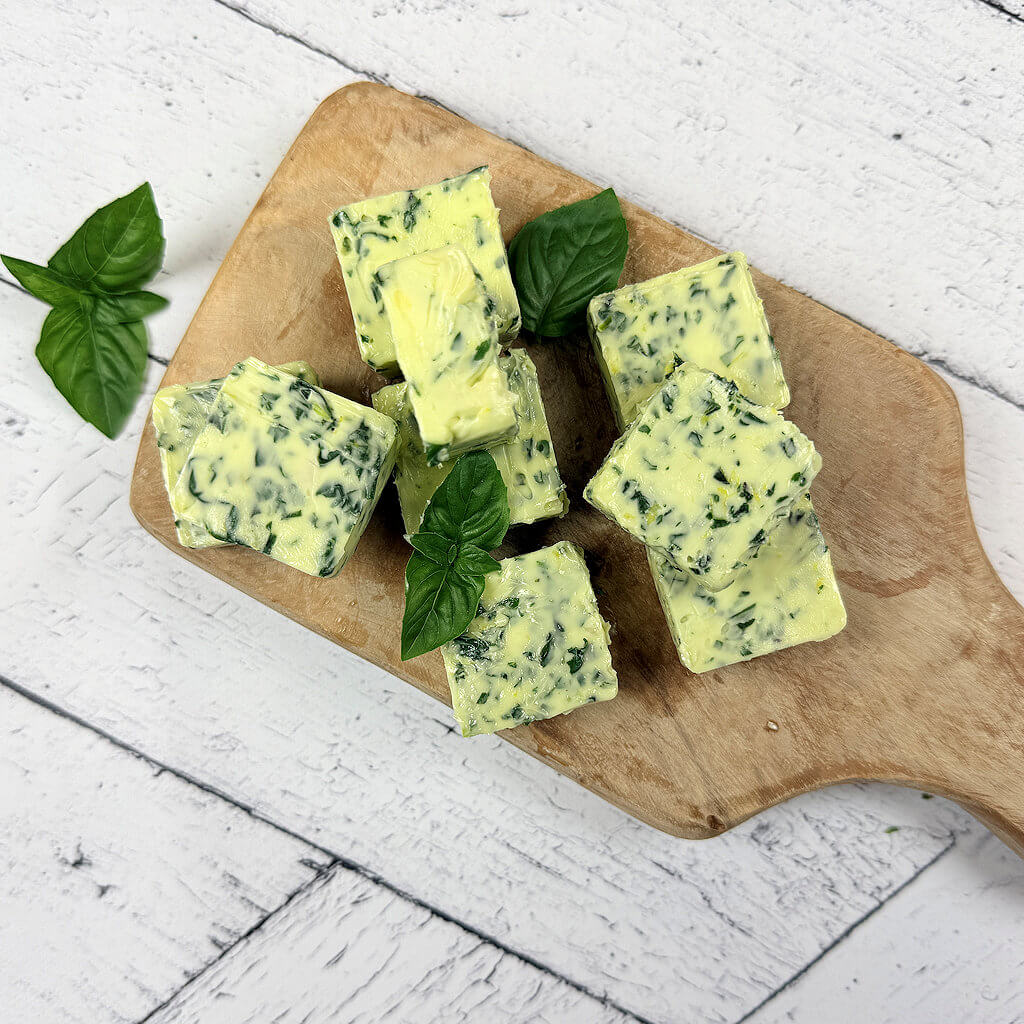
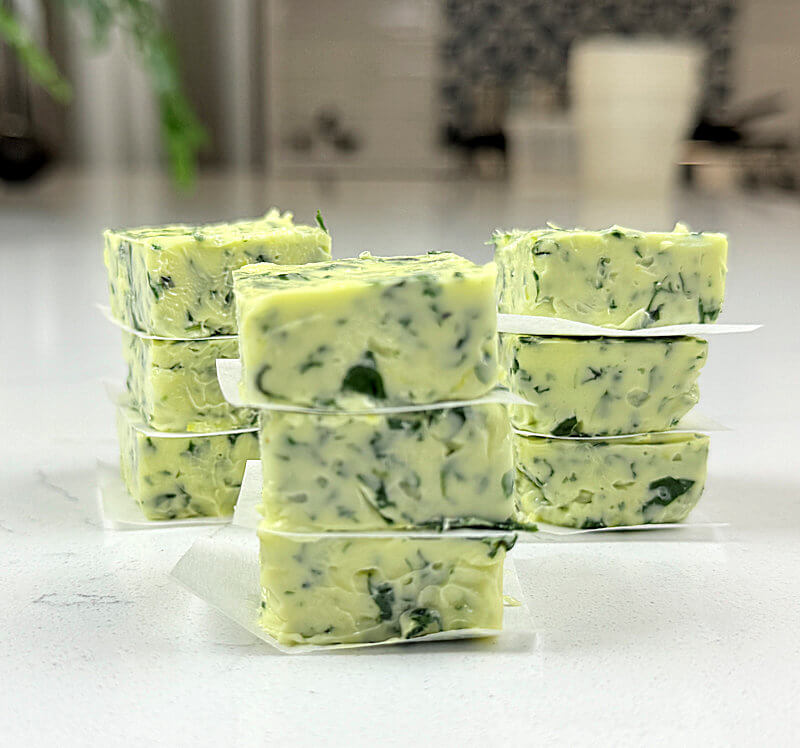
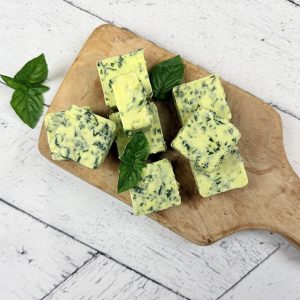
The basil is blanched first, the same way as for the basil oil — a brief bath in boiling water, immediately into ice water, then squeezed completely dry before going into the food processor with the butter, lemon zest, and garlic. The silicone mold with one-tablespoon cavities is the detail that makes this recipe practical: the butter freezes in pre-portioned rounds that pop out cleanly and go straight back into the fridge or onto a hot pan without any slicing or guessing at quantity.
Nine tablespoons is the yield, a modest amount that disappears quickly once you start using it. A knob melted over grilled fish, stirred into hot pasta, slid under the skin of a chicken breast before roasting, or simply placed on a slice of warm bread: basil butter is the finishing step that makes a good dish better without drawing attention to itself. Make a batch, freeze it, and the question of what to add at the end answers itself.
A Few Things Worth Knowing
Blanching the basil before it goes into the butter is the step that makes the color last. Raw basil blended with butter turns an attractive green initially, but the oxidizing enzymes that weren’t deactivated by heat will dull it to an olive brown within a day or two, in the fridge and especially once the butter is used warm in a pan. Blanched basil holds its vivid green through freezing, through refrigeration, and through gentle heat. The lemon zest does two things: it brightens the basil flavor and its acidity keeps the garlic from tasting sharp. Good quality butter matters more here than in almost any other recipe ; the butter is the base, not the background, and its flavor carries through to everything you put the compound butter on.
This post may contain affiliate links, which means that I make a small commission off items you purchase at no additional cost to you.
Key Ingredients in This Recipe
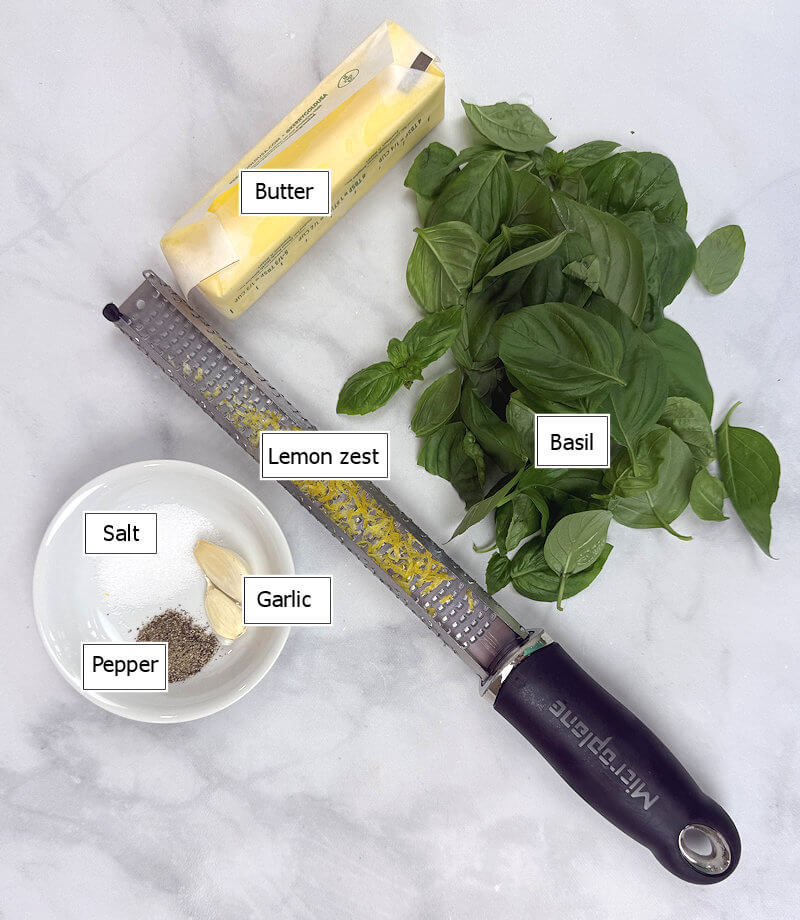
You’ll find the complete list of ingredients and exact quantities in the recipe below.
- Basil leaves
- Butter – salted or unsalted.
- Lemon zest
- Garlic
- Salt & pepper (optional)
Watch this quick video below, it gives you a visual guide to the recipe, from prep to finish.
How to Make a Small Batch of Basil Butter
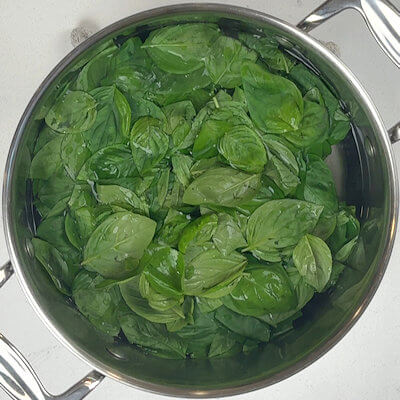
Step 1 – Wash basil leaves and blanch them for about 30 seconds in boiling water.
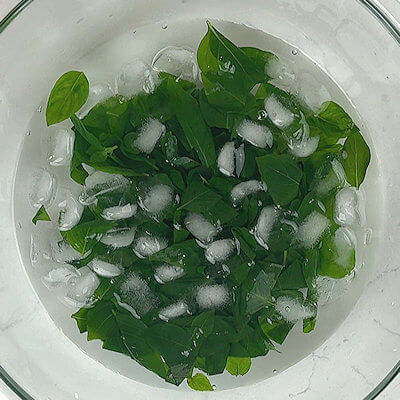
Step 2 – Remove the leaves with a slotted spoon and place them in an ice bath to cool down. Squeeze out as much water as you can and dry with a kitchen or paper towel.
Step 3 – Place all the ingredients in a food processor (the butter needs to be at room temperature) and process.
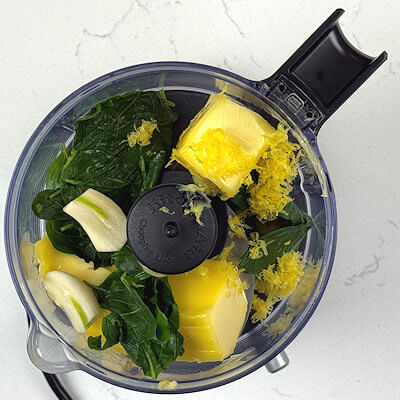
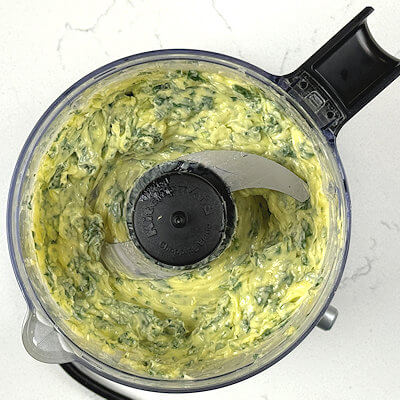
Step 4 – Process until the mixture is well combined. You can strive to chop the basil leaves very fine or stop until you still have larger pieces.
Step 5 – Press the basil butter into a silicone mold. I’ve used a mold with small, 1 tablespoon sized cavities.
You can also form the butter into a log and wrap and roll it in parchment paper or plastic wrap.
Place the mold in the refrigerator and allow to become firm. This will take 30-45 minutes in the fridge or about 10-15 minutes in the freezer. Or just store it in the fridge overnight.
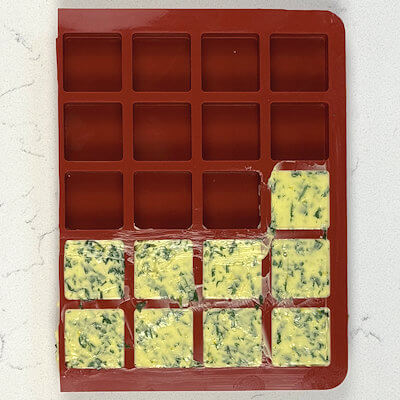
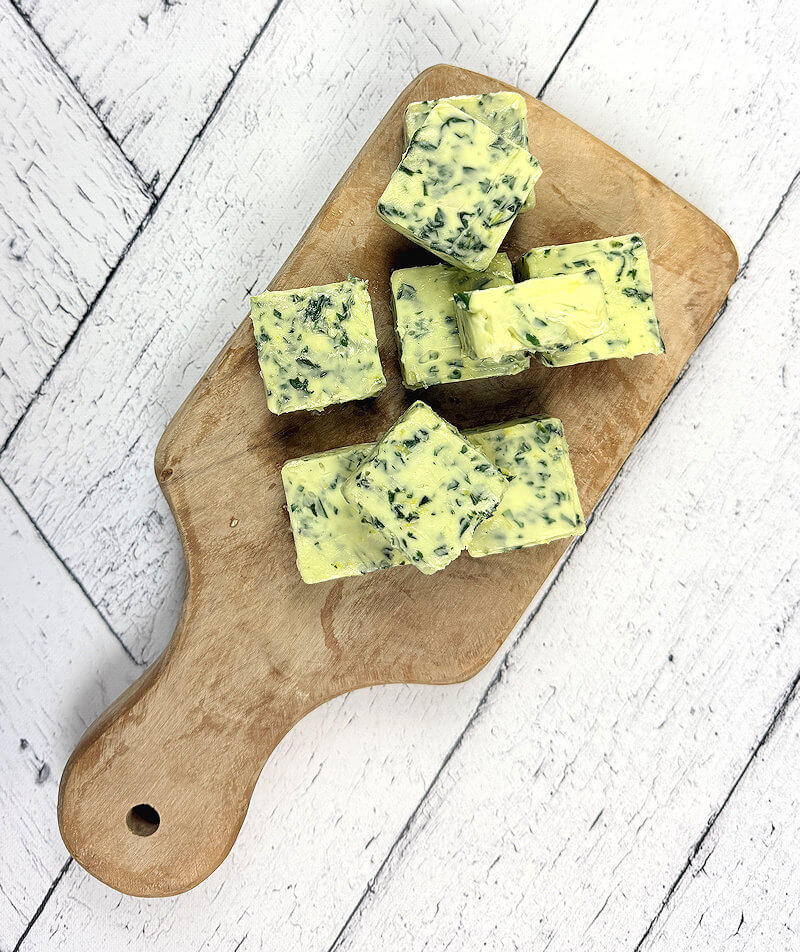
Remove the mold from the refrigerator or freezer and un-mold the basil butter. You now have 9 tablespoons at your disposal to use in numerous recipes.
Alternatives & Substitutes
As far as flavors and textural alternatives are concerned, the choices are endless. I have a post with a few sweet compound butters and one with savory compound butters.
A few points to make:
- European vs American butter. In general European butter contains more butterfat and less water. European butter is more yellow than American butter. Many European butters are cultured. One is not necessarily better than the other, but it may depend on what you’re making. For compound butter, a gourmet luxury you use to elevate a recipe, I would always choose a European or European-style butter and luckily, we can find high butterfat, cultured butters in the US, made by US companies. One I like is Vermont’s Creamery Cultured butter, available in salted and unsalted. One European butter that is readily available in grocery stores is Kerrygold butter.
- Salted vs unsalted butter. This is a personal choice. I almost always use salted butter, because I think it tastes better. For a compound butter there are 2 line of thoughts in my opinion: 1. Use unsalted butter, because then you are flexible and you can apply it to every recipe. Salt can be added, but never taken out. 2. Use salted butter because it improves the flavor and you don’t have to bother with adding salt later. I specifically like butter salted with larger sea salt crystals.
- Instead of basil you can use any herb in any combinations you like. Starting with the traditional French Beurre Maître d’Hôtel, butter with parsley and lemon juice (no garlic). Rosemary butter, (roasted) garlic butter with parsley, lemon-thyme butter, dill-chives etc.
- The ratio butter : herbs. This is again a personal choice and may depend on how you use the compound butter. If you use the compound butter as a finishing butter, e.g. on top of a steak, a fish, spreading over corn on the cob, slather on a slice of freshly baked bread or as a finishing touch on mashed sweet potatoes, your ratio can be anything. Lots of herbs; the ratio can be as close as 1 : 1 with coarsely or finely chopped herbs. If you want to use the compound butter to cook with than the ratio butter : herbs should be leaning towards the butter with finely chopped herbs. Ratios like 4 tablespoons butter : 2 tablespoons herbs or 8 tablespoons butter : 1 tablespoon herbs. Coarsely chopped herbs my burn during cooking and not enough butter may jeopardize the function of the butter to begin with.
Frequently Asked Questions
You certainly can. Finely chop the blanched basil by hand and mix it into softened butter with a fork or spoon.
No, you don’t. A more traditional way is forming the butter into a log and wrapping it in parchment paper or plastic wrap works just as well. Slice off rounds as needed directly from the fridge or freezer.
In the fridge: up to 2 weeks. In the freezer: up to 3 months. The best way to store the individual pieces from the mold is with some parchment paper in between each piece. The frozen portions can go straight from freezer to pan when you cook with it, but allow to thaw first when you use it as finishing butter.
Other Basil Condiments
Basil Butter (Small Batch)
Pin Recipe FacebookIngredients
- 8 tablespoons butter, room temperature (NOTE 1)
- 3/4 cup basil, (NOTE 2)
- 1/2 lemon, zest only
- 1 clove garlic
- salt & pepper
Instructions
- Wash basil leaves and blanch them for about 30 seconds in boiling water.
- Remove the leaves with a slotted spoon and place them in an ice bath to cool down. Squeeze out as much water as you can and dry with a kitchen or paper towel.
- Place all the ingredients in a food processor and process until the mixture is well combined. (NOTE 3)
- Press the basil butter into a silicone mold or form the butter into a log and wrap and roll it in parchment paper or plastic wrap.
- Place the mold or the roll in the refrigerator and allow to become firm. This will take 30-45 minutes in the fridge or about 10-15 minutes in the freezer. Or just store it in the fridge overnight.
- Remove the mold from the refrigerator or freezer and un-mold the basil butter. You now have 9 tablespoons at your disposal to use in numerous recipes.
Notes
- You can use American or European butter. You can use salted or unsalted butter.
- 3/4 cup of basil leaves becomes about 4 tablespoons blanched basil leaves.
- You can strive to chop the basil leaves very fine or stop until you still have larger pieces.
Nutrition
Nutrition information is automatically calculated, so should only be used as an approximation.