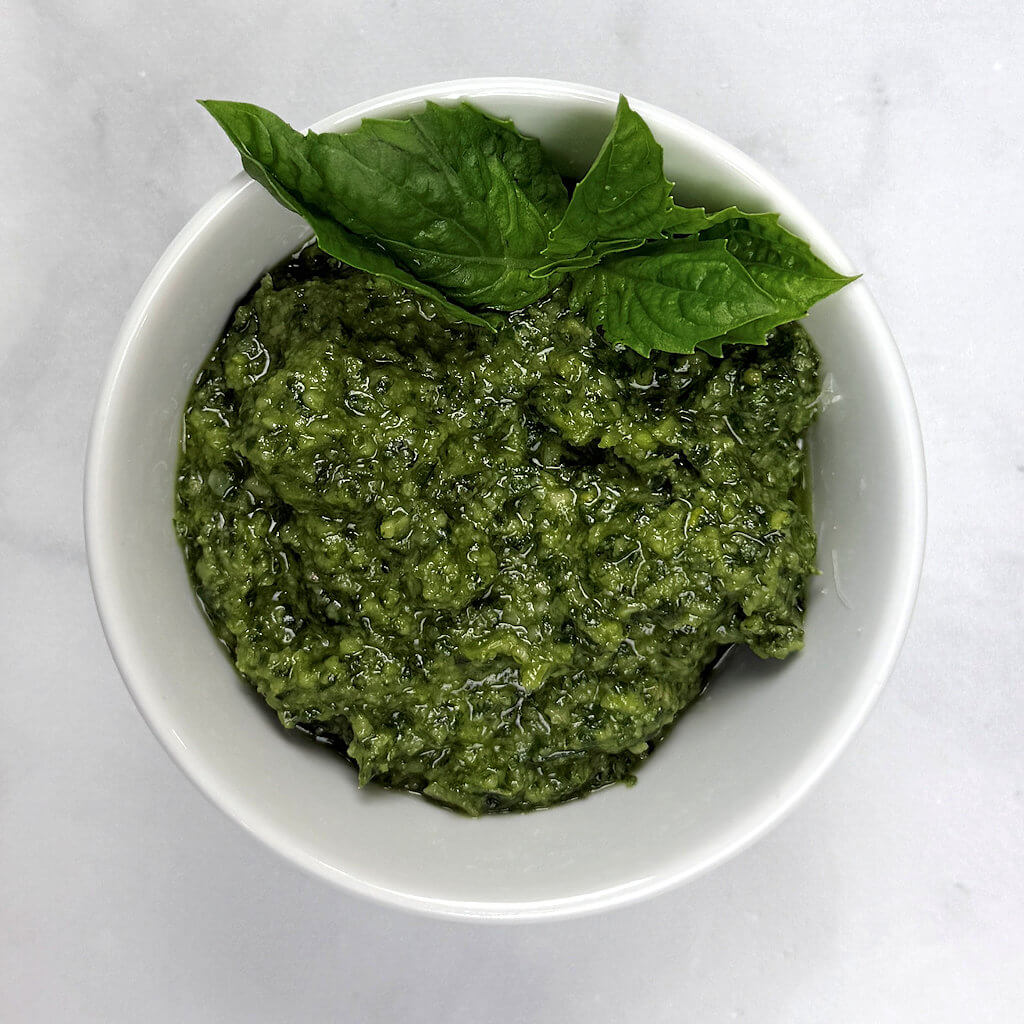
The difference between homemade and jarred pesto is not subtle. Homemade is bright green, fragrant, and tastes of the herb rather than of preserved herb. It takes no special equipment and about five minutes of active time. This recipe yields half a cup, exactly the right amount to dress two generous servings of pasta, spread across a pizza, stir into soup, or spoon over grilled fish without making more than you can use while it is still at its best.
Getting it right comes down to a few details: fresh basil with no dark spots, genuine Parmigiano Reggiano rather than a substitute, and olive oil added slowly so the emulsion holds. A thin layer of oil on top keeps it vivid green in the fridge. Beyond that, it is just blending — and it will be better than anything in a jar.
Pesto comes from the Italian verb ‘pestare’ and refers to the crushing (or pounding) of ingredients with a mortar and pestle. Pesto does not specify what is pounded, and pesto is not always green. But most of us think and/or mean basil pesto when we say ‘pesto’.
This brilliantly vibrant green and fragrant sauce is known in Italy as Pesto alla Genovese, a pesto from Genoa and when made with Basilico Genovese, is considered the best and has been awarded a PDO (Protected Designation of Origin). This means that a product can only carry the name Pesto alla Genovese when it adheres to strict standards for its origin and ingredients. Similar to cheeses that have a PDO accreditation (Italy) or an AOC (Appellation d’Origine Controlée) accreditation in France (like Roquefort or Camembert de Normandie).
What to Expect
The difference between homemade and jarred pesto is a freshness question, but it’s also a technique question. Jarred pesto is cooked during processing, which mutes the basil and dulls the color. Homemade is raw, which means the basil stays vivid green, fragrant, and sharp-edged in flavor. Adding the olive oil gradually rather than all at once helps the emulsion hold so the sauce stays cohesive rather than splitting into oil and paste. The cheese goes in last for a reason too: processing it with the basil would make it gummy. Pulsed in at the end, it stays as a distinct flavor layer rather than disappearing into the background.
This post may contain affiliate links, which means that I make a small commission off items you purchase at no additional cost to you.
Key Ingredients in this Recipe
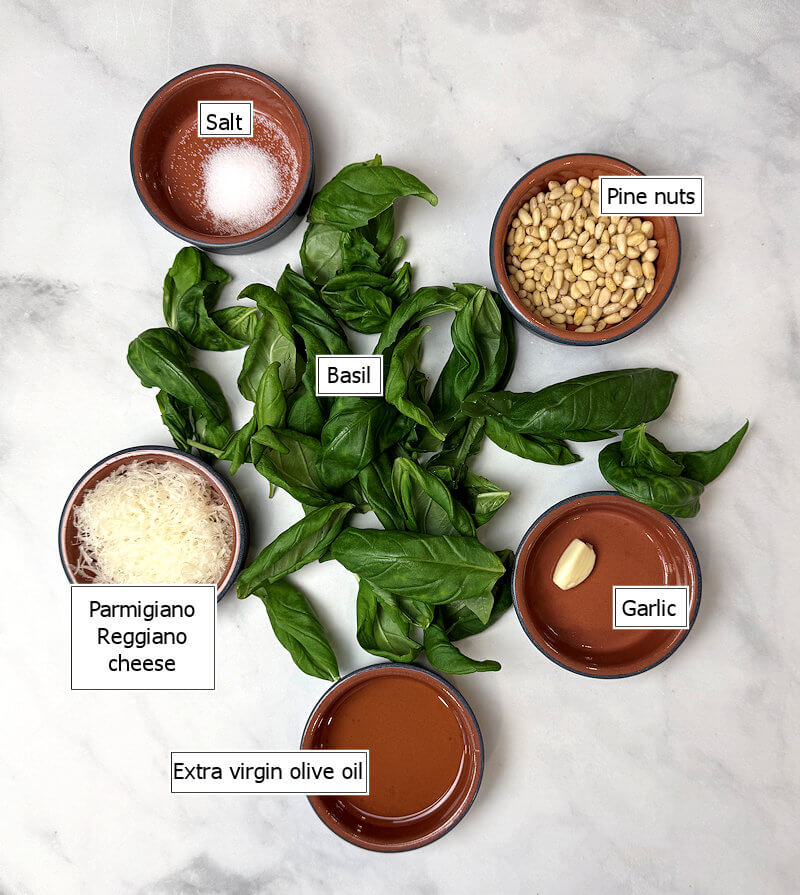
In simple recipes, like this basil pesto, that have a powerful impact on the dish in which you use it, like a salad, a pasta or a pizza, I believe that you should use the highest quality ingredients you can afford. It will make a difference,.
You’ll find the complete list of ingredients and exact quantities in the recipe below.
- Basil leaves – do not use the stems, just the leaves. Green leaves, not brown damaged leaves to have the best result.
- Parmigiano Reggiano cheese – Pecorino Roman cheese is a great alternative or a combination of these two cheeses. You can also leave out the cheese entirely and create a vegan basil pesto.
- Pine nuts
- Garlic – use a fresh garlic clove.
- Extra virgin olive oil
- Salt
How to Make Basil Pesto
This is a very simple thing to do, especially when you have a food processor of some sort.
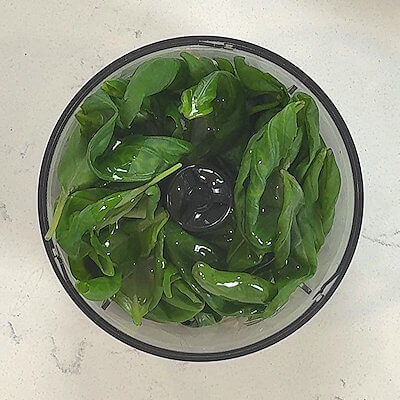
Step 1 – Place garlic, pine nuts, olive oil, salt, basil leaves in a food processor and process until you have a homogeneous mixture that is finely chopped.
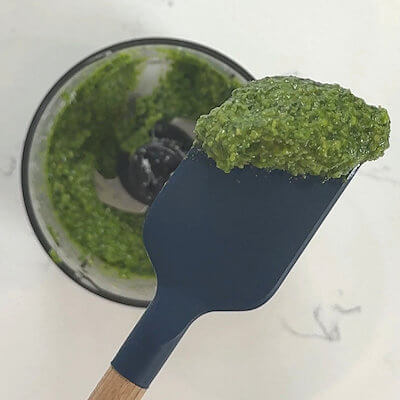
Step 2 – Mix in the finely grated Parmigiano Reggiano cheese and pulse a few times. Taste and add salt & pepper if needed.
That’s all there is to it. Yes, it is that simple. You can have a fresh jar of basil pesto ready in a minute or two.
This pesto will keep for a few days in an airtight container in the fridge, but don’t be surprise if the surface may start turning brown. To prevent that from happening, drizzle a little extra olive oil on the top and/or some plastic wrap before you seal the jar. This will increase the chance it staying green. An alternative way to slow down the pesto from turning brown is to blanch, shock and dry the basil leaves before processing them in a food processor.
Pesto Alternatives
As mentioned in the beginning, the word pesto has nothing to do with basil, it means pounding or crushing (and traditionally with a mortar and pestle). Consequently, you can pound and crush so many ingredients and create an alternative pesto. Let’s explore some
- Kale pesto, combining kale, olive oil, garlic, Pecorino Romano cheese, pine nuts and salt & pepper in a food processor.
- Walnut pesto, combining walnuts with sheep cheese (this may be a Pecorino cheese).
- Trapanese pesto, a Sicilian variety made from basil leave, almonds and tomatoes.
- Pesto Calabrese, a pesto that has some smoky hotness from roasted red peppers and chili flakes, but also ricotta and almonds.
- Pistachio pesto, with pistachios and basil, mint or arugula.
You have a variety in nuts at your disposal, make the best of it, use cashews, walnuts, pistachios, almonds or hazelnuts. Or alternatively, don’t use nuts at all, like the French pistou.
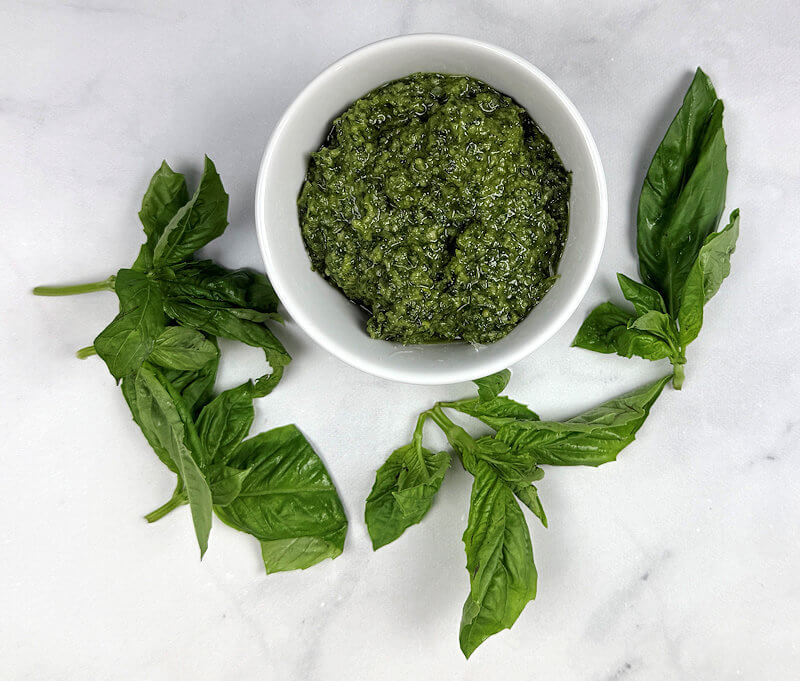
It goes without saying that you can create your own pesto combination. One traditional recipe from Italian, Ligurian, Genoese or Genovese in which basil pesto plays a major role is Trofie al Pesto Genovese.
Other Basil Condiments
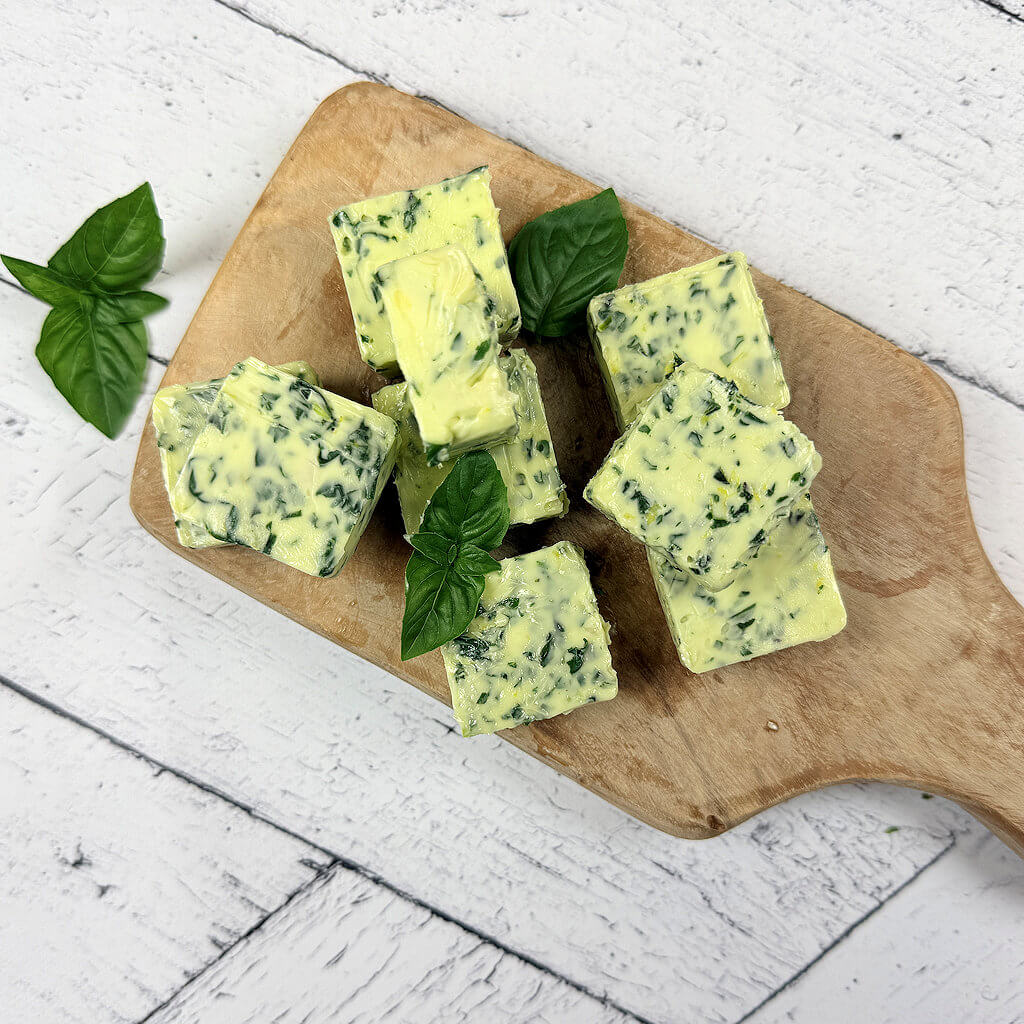
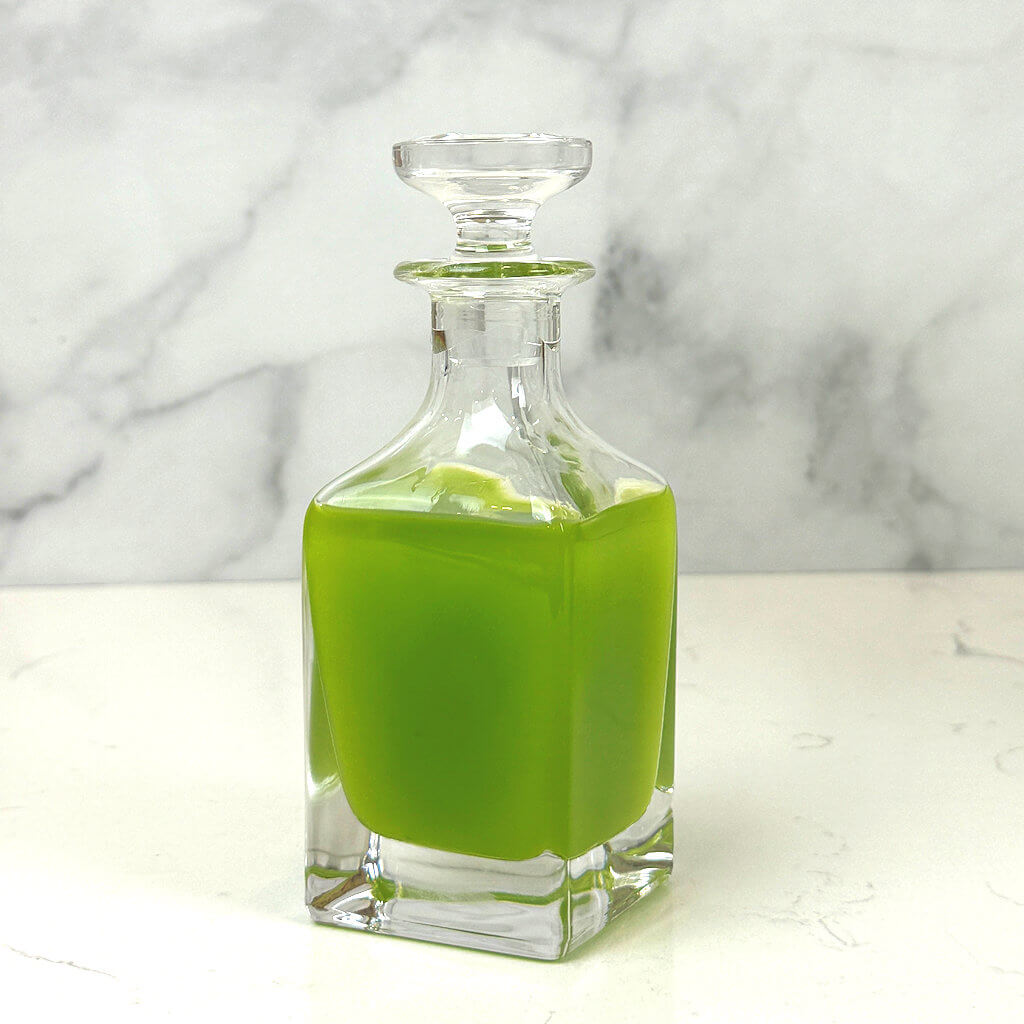
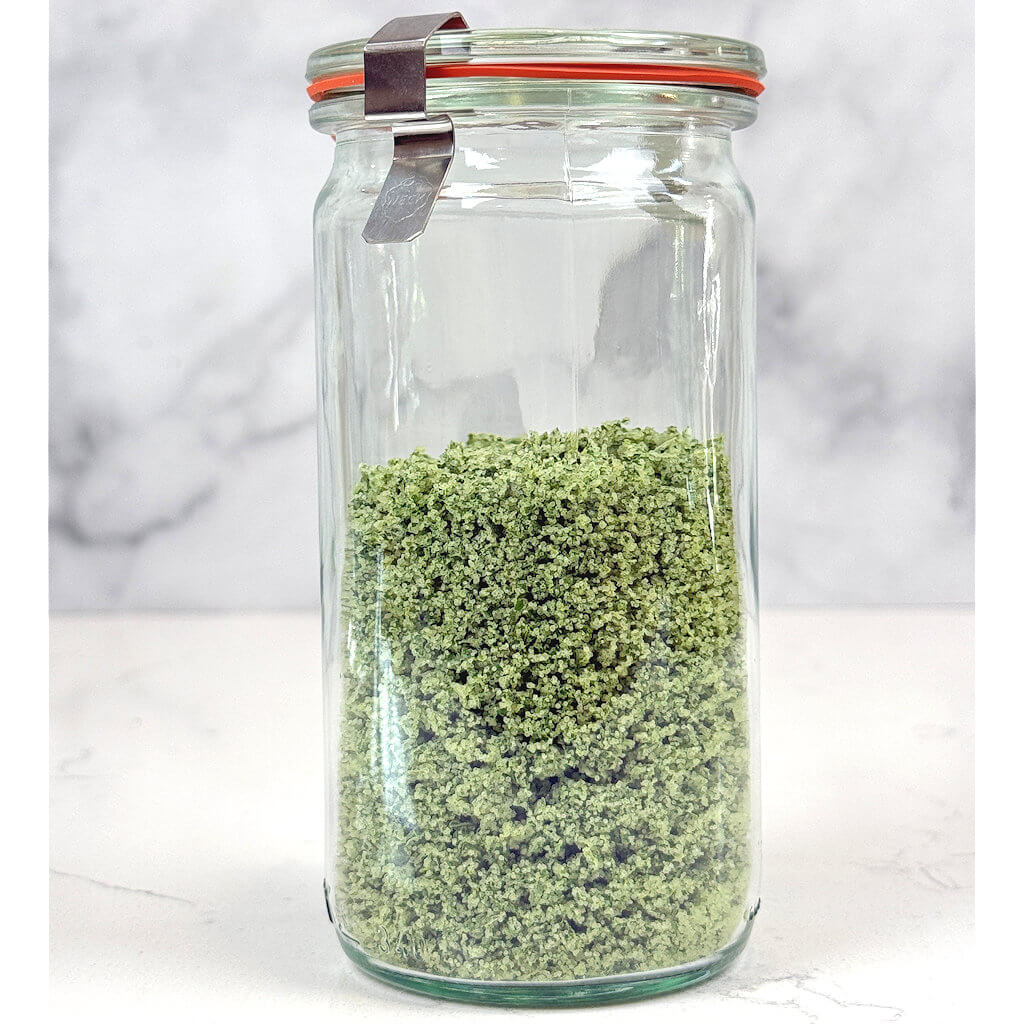
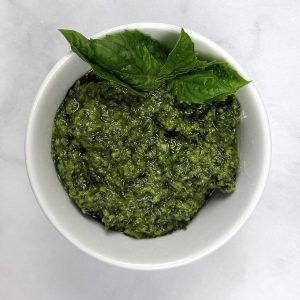
Basil Pesto (small batch)
Pin Recipe FacebookIngredients
- 0.5 ounces basil leaves, about 2 cups
- 0.5 ounces pine nuts
- 1 clove garlic
- 0.5 ounces Parmigiano Reggiano cheese, finely grated
- 3 tablespoons extra virgin olive oil
- salt & pepper
Instructions
- Place garlic, pine nuts, olive oil, salt, basil leaves in a food processor and process until you have a homogeneous mixture that is finely chopped.
- Mix in the finely grated Parmigiano Reggiano cheese and pulse a few times. Taste and add salt & pepper if needed.
Notes
- This pesto will keep for a few days in an airtight container in the fridge, but don’t be surprised if the surface may start turning brown. To prevent that from happening, drizzle a little extra olive oil on the top and cover with plastic wrap before you seal the jar. This will increase the chance it staying green.
Nutrition
Nutrition information is automatically calculated, so should only be used as an approximation.