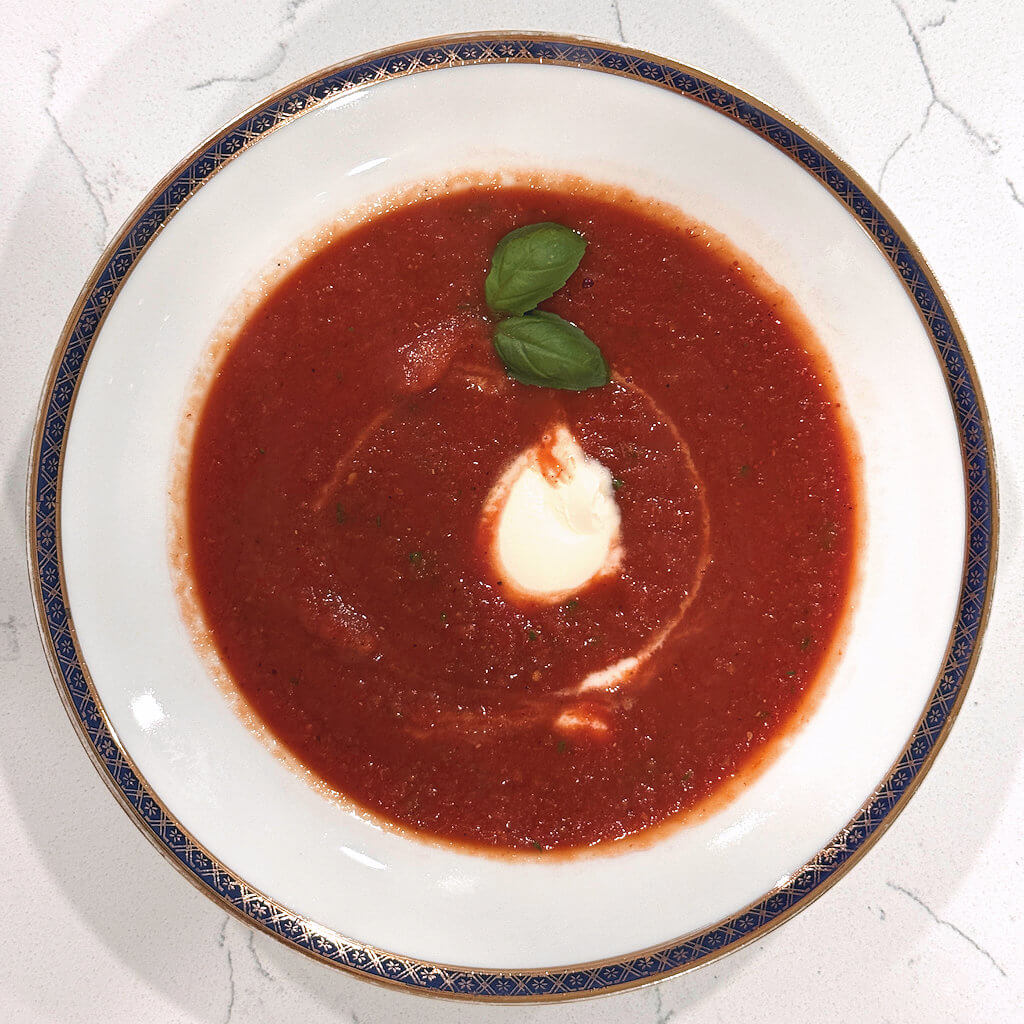
Updated 08.10.25
Let me tell you how this tomato soup came about. It is a rather old story. It was years and years ago that my husband and I were on our way from Holland, via Washington and Colonial Williamsburg to Hilton Head Island. To were going to spend a week in a tennis camp, improving our tennis game. The trip from Williamsburg to HH was nasty; heavy rain and low temperatures. We didn’t think we were ever going to play tennis, but the following day the weather was absolutely gorgeous and so was the rest of the week.
Upon arrival in Hilton Head I was cold, I felt miserable and was not really hungry. I knew I needed to eat something, something comforting and light. We went to the restaurant in the hotel we stayed in and I ordered a tomato soup. That soup was amazing. This recipe is the recreation of that tomato soup.
The Case of This Soup Bowl
Roasting rather than simmering is what makes this soup taste the way it does. A simmered tomato soup cooks in water, it extracts flavor but also dilutes it. A roasted tomato soup drives off water first, concentrating the sugars and acids before anything else happens, which is why the flavor is so much deeper with so few supporting ingredients. The sieve is worth the effort for the same reason; once the skin and seeds are out, the soup has a texture that nothing else can replicate, and the color goes from orange-red to a deep, clear crimson that looks as good as it tastes.
This post may contain affiliate links, which means that I make a small commission off items you purchase at no additional cost to you.
Key Ingredients in This Recipe
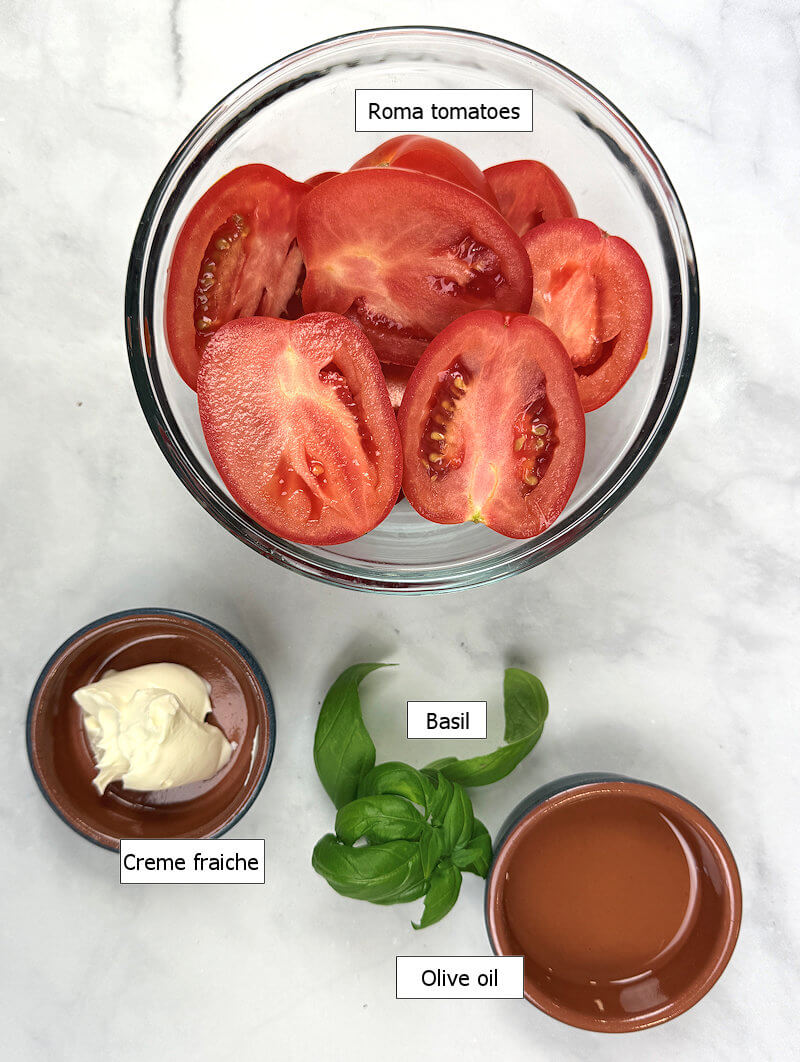
You’ll find the complete list of ingredients and exact quantities in the recipe below.
- Plum or Roma tomatoes
- Olive oil
- Crème fraîche
- Fresh basil
The most important thing for this Fresh Summer Tomato Soup is using ripe tomatoes. I used to use tomatoes on the vine. A better choice however is to use plum or Roma tomatoes, since they often have more flavor.
How to Make Fresh Summer Tomato Soup
There are 3 ways to make this soup
- Wash and cut the tomatoes in half. Place them in a pot with no water. Start cooking them on low heat, until you see some water released by the tomatoes, then increase the heat and cook until soft. The flavor of the soup is relatively watery, as none is evaporated.
- Wash and dry half of the tomatoes. Cut them in half and place them on a baking dish. Season with salt & pepper and drizzle with olive oil. Roast the tomatoes in an oven of 400°F and cook the rest as described under number 1. The flavor is better than 1 because half of the tomatoes have lost their moisture during the roasting.
- Wash and dry the tomatoes, cut them in half and place them on a baking dish. Season with salt & pepper and drizzle with olive oil. Roast the tomatoes. This is by far the best method as it delivers a superior flavor over the other two.
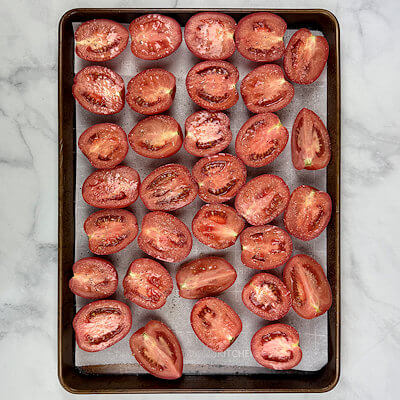
Step 1 – Wash, dry and cut the tomatoes in half. Place them on a baking sheet, lined with parchment paper, cut side up. Season with salt & pepper and drizzle with olive oil.
Dry the tomatoes as you want as little water in the soup as possible.
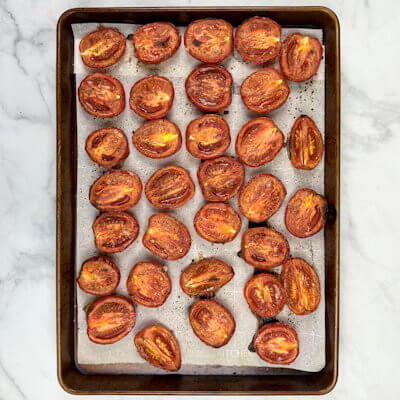
Step 2 – Roast the tomatoes in an oven of 400 degrees F for 1-1.5 hours.
You will see that the tomatoes begin to wrinkle, but there is still enough moisture left. You don’t want to dry them entirely.
Step 3 – Transfer all the tomatoes to a food processor and pulse until you have a relatively smooth texture.
You will see that there are tiny pieces in the soup, coming from the skin and the core of the tomatoes. This is perfectly fine as it provides a lot of fiber.
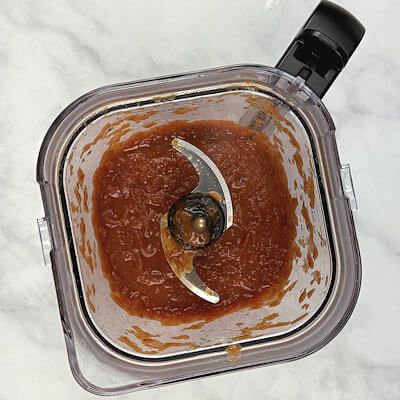
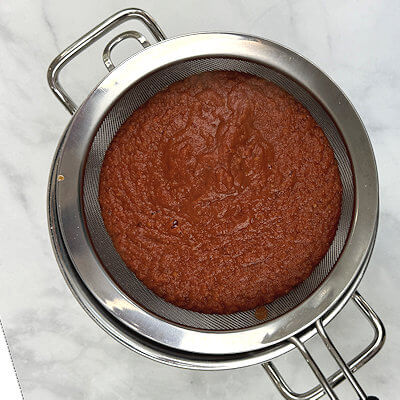
Step 4 – For this particular soup, I am going against my desire for adding texture and pour the soup through a sieve. It is so velvety once the bits and pieces are out of the soup. I know this is time-consuming and requires some elbow grease, but it is absolutely worth it.
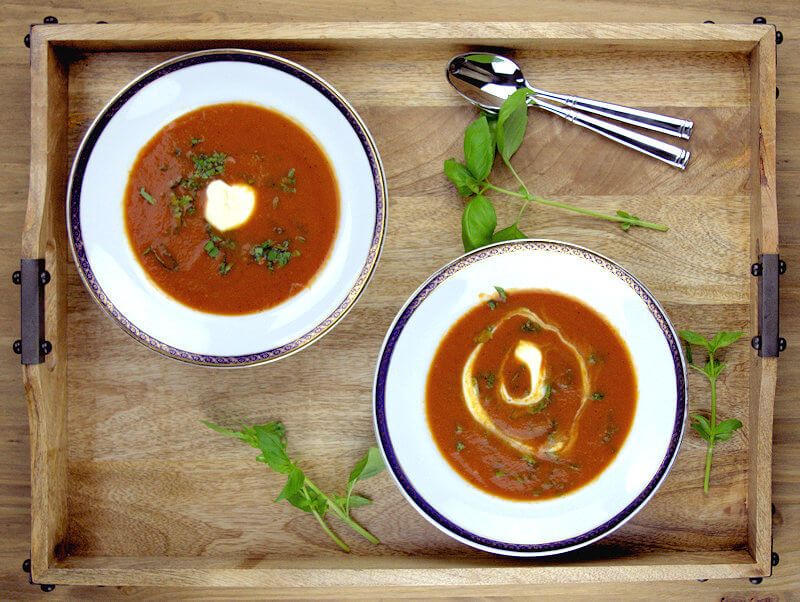
Once you manged to get all the soup through the sieve, you will be happy to know that you’re basically done, other than adding some optics and introducing some other flavors. First things first, add salt and pepper to taste. Then add some basil and crème fraîche. Mix the basil into the soup, then divide the soup over bowls or plates and add a dollop of crème fraîche. Leave the dollop in the center or swirl it through the soup. Sprinkle with some basil and you’re ready to serve this Fresh Summer Tomato Soup and enjoy!
This recipe will generate about 2-2.5 cups of soup. A perfect volume for two. Serve with Perfectly Soft Dinner Rolls or Dutch Tiger Bread or Crunch Bread. By all means your favorite grilled cheese is a perfect match as well.
Frequently Asked Questions
Yes you can. It actually freezes very well. Freeze the soup without the crème fraîche. Add those just before the moment of serving.
My advice for thawing would be to move it from the freezer to the fridge the night before. Around dinner time, transfer the soup (not all with be thawed) into a pan and slowly warm it. No need to boil it.
Yes, you certainly can. And you have a few options. I personally like the Cento San Marzano Certified Peeled Tomatoes, but there are many other possibilities, like passata. You can decide how pureed you want to go with your soup.
No, you don’t need to do that. I does make the soup deliciously smooth, but with all the tomato pieces, it has charm as well.
When you have to chance to buy tomatoes in the peak of season, please try this fresh summer tomato soup. It. Is. Delicious.
Fresh Summer Tomato Soup
Pin Recipe FacebookIngredients
- 4.5 pounds plum tomatoes
- 1.5 tablespoons olive oil
- salt and pepper
- 2 tablespoons crème fraîche
- basil
Instructions
- Preheat oven to 400 degrees F. Line a baking sheet with parchment paper.
- Wash, dry and cut the tomatoes in half. Place them on a baking sheet, lined with parchment paper, cut side up. Season with salt & pepper and drizzle with olive oil. (NOTE 1)
- Roast the tomatoes in the oven for 1-1.5 hours. (NOTE 2)
- Transfer all the tomatoes to a food processor and pulse until you have a relative smooth texture.
- Pour soup through a sieve to get rid of all the bits and pieces. Add salt and pepper to taste. (NOTE 3)
- Cut basil in fine shreds; use the chiffonade technique. Create a pile of basil leaves, one atop the next etc. Roll the leaves and then cut small strips.
- Add most of the basil over the soup and stir (leave some behind for garnish).
- Divide soup over 2 bowls or soup plates. Sprinkle with basil and add 1 tablespoon of crème fraîche to each plate. Leave it in the middle or swirl crème fraîche through the soup.
Notes
- Drying the tomatoes before roasting them prevents unnecessary moisture that needs to evaporate.
- You will see that the tomatoes begin to wrinkle, but there is still enough moisture left. You don’t want to dry them entirely; you’re making soup not dried tomatoes.
- You will see that there are tiny bits and pieces in the soup, coming from the skin and the core of the tomatoes. This is perfectly fine as it provides a lot of fiber. For this particular soup, I am going against my desire for adding texture and pour the soup through a sieve. It is so velvety once the bits and pieces are out of the soup. I know it is time-consuming and requires some long lasting elbow grease, but it is absolutely worth it.
Nutrition
Nutrition information is automatically calculated, so should only be used as an approximation.