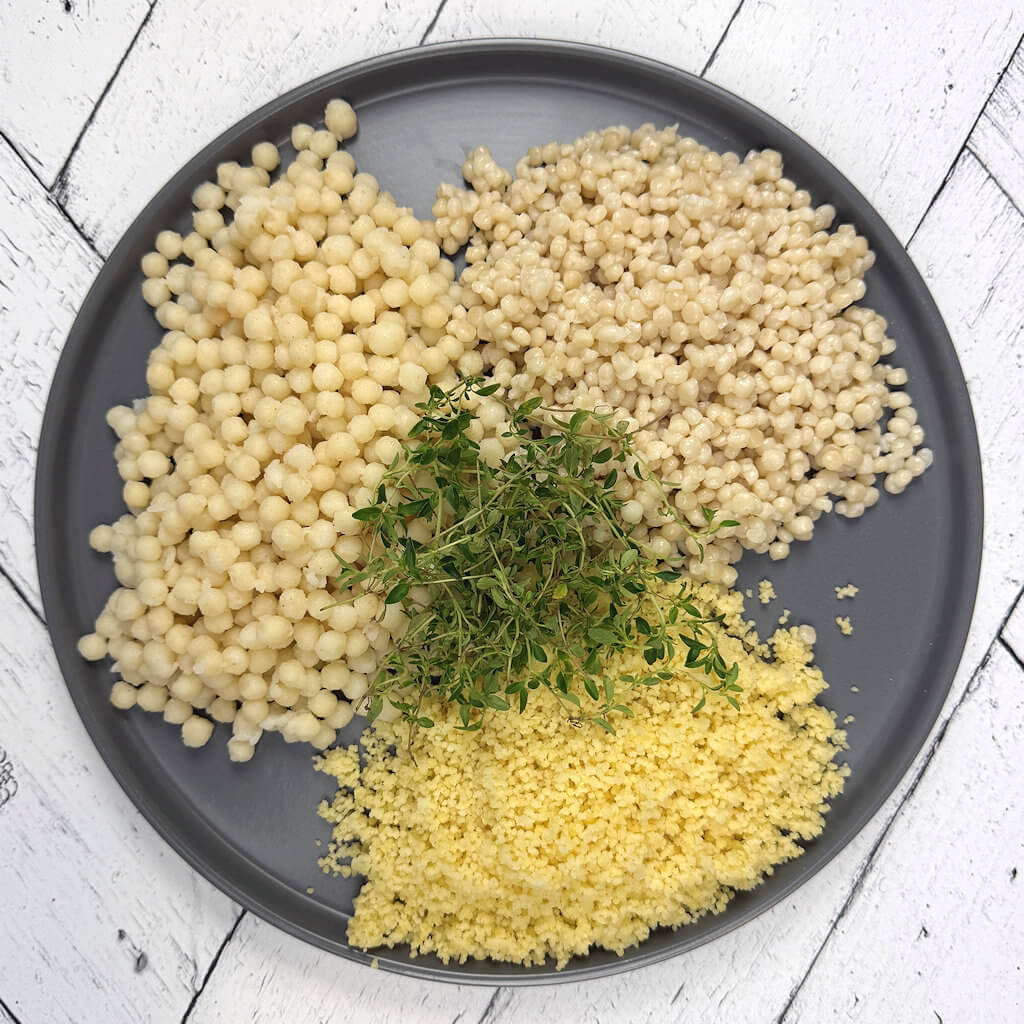
Couscous has a reputation for being foolproof, and for the small Moroccan kind, that’s mostly true; dump, cover, wait. But once you bring pearl or Lebanese couscous into the mix, “just add hot water” stops being good advice. Each type needs its own method to come out right. Here’s how to cook all three, plus how to make sure none of them taste boring.
First, a Quick Refresher on the Differences
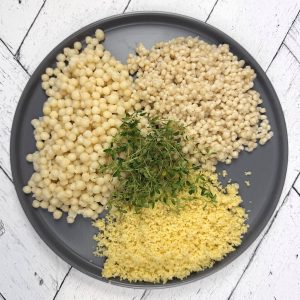
If you haven’t read our post on what couscous actually is, here’s the short version: all three types are made from the same durum wheat semolina, but they’re rolled into different sizes, which changes how they cook.
- Moroccan couscous — tiny granules, pre-steamed, cooks by simply steaming in hot liquid off the heat.
- Israeli (pearl) couscous — larger, toasted pearls, cooked more like pasta or risotto.
- Lebanese couscous — the largest pearls, with the chewiest texture, simmered low and slow.
Same starting ingredient, three different cooking methods. Let’s go through each.
How to Cook Moroccan Couscous
This is the fast, low-effort one, and the ratio is simple: 1 cup couscous to 1 cup liquid.
Bring 1 cup of water or broth to a boil, with a pinch of salt (and a small drizzle of olive oil or butter if you like).
Add the couscous, stir and cover.
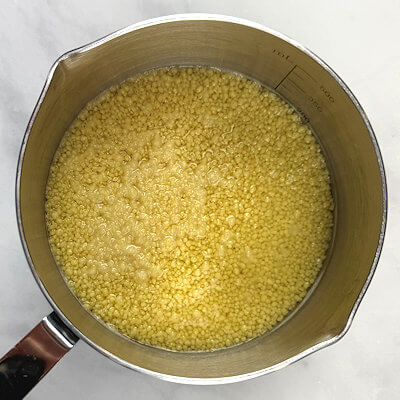
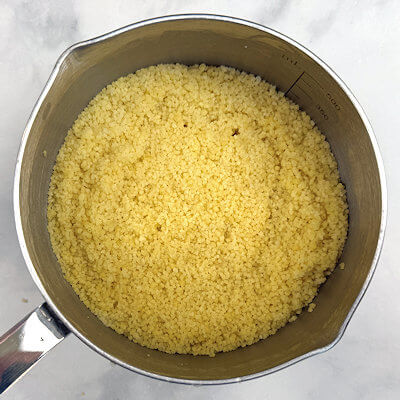
Immediately remove from heat and let it sit for 5-10 minutes; no stirring, no peeking. Uncover and fluff thoroughly with a fork, breaking up any clumps.
The yield is about 3 cups of cooked Moroccan couscous.
That’s genuinely it. The couscous steams itself using the residual heat and steam trapped under the lid, which is why you never want to leave it on the burner; it’ll turn gluey.
Frequently Asked Question
Yes, you can. Bring water or broth with a pinch of salt (and a small drizzle of olive oil or butter if you like) in a large bowl to a boil in the microwave. Stir in the Moroccan couscous. Cover and set aside for 5-10 minutes until the couscous has fully absorbed the liquid. Uncover and fluff thoroughly with a fork, breaking up any clumps.
How to Cook Israeli (Pearl) Couscous
Pearl couscous behaves much more like a small pasta or risotto grain, and the ratio is: 1 cup couscous to 1.5 cups liquid.
Bring 1.5 cups of water or broth to a boil, with a pinch of salt. Add couscous, stir and bring to a simmer. Then reduce heat, and cover.
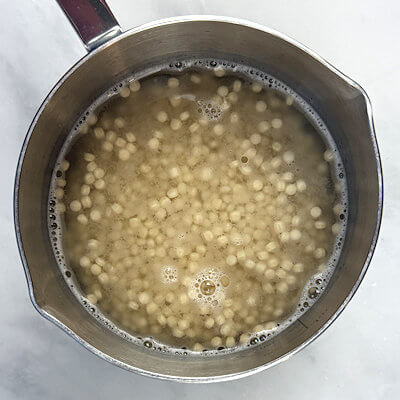
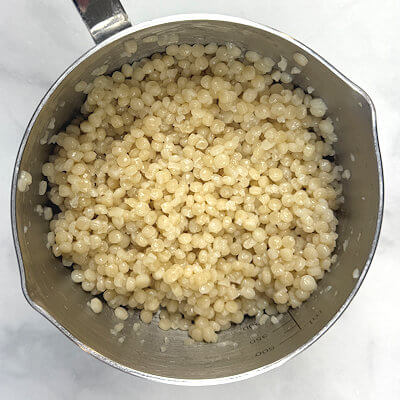
Simmer for about 10 minutes, until the liquid is absorbed and the pearls are tender but still have a slight chew. Please check the packaging as the cooking time may vary per brand.
Remove from heat, let it rest covered for a few minutes, then fluff with a fork.
Frequently Asked Question
Yes, you can. However, if you toast the couscous first, all that extra flavor you built up will go ‘down the drain’ and is a waste of effort.
How to Cook Lebanese Couscous
The largest pearls need the most time and the most liquid; the ratio is: 1 cup couscous to 2 cups liquid. This pasta is traditionally cooked in a stew or pilaf-style dish.
Bring 2 cups of water or broth to a boil, with a pinch of salt and/or spices. Add the couscous, stir, bring to a simmer and cover.
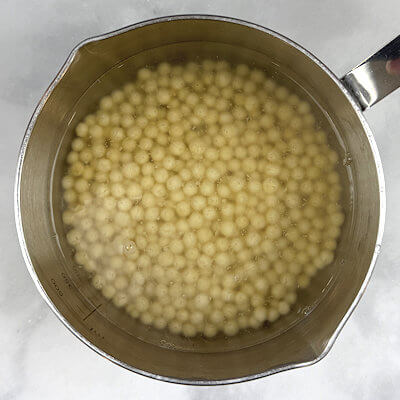
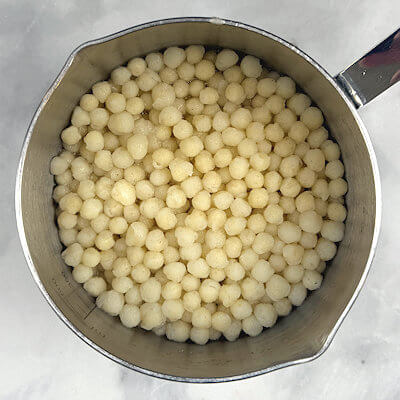
Simmer for about 15 minutes, stirring occasionally, until the pearls are tender all the way through with a pleasant chew and not crunchy in the center. Also here, please check the packaging as the cooking time may vary per brand.
If there’s excess liquid left, drain it off; if it’s dry but still slightly firm, add a splash more hot water and continue covered for a few more minutes.
Frequently Asked Question
Yes, you can, if you really forget the clock. Lebanese couscous is more forgiving than the Israeli and the Moroccan couscous. Overcooking Lebanese couscous can result in a mushy, gluey mess.
Side-by-Side: Cooking Time and Ratio Cheat Sheet
| Type | Liquid Ratio | Method | Cook Time |
| Moroccan | 1:1 | Steam off-heat | 5 minutes |
| Israeli (pearl) | 1:1.5 | (Toast), simmer | 8-10 minutes |
| Lebanese | 1:2 | (Toast), simmer | 15-20 minutes |
How to Add Real Flavor to Couscous
Because couscous is so bland/mild on its own, the liquid you cook it in and what you stir in afterwards are doing almost all the work. A few reliable ways to build flavor:
Toast your couscous before you cook it. This step is optional but can add depth of flavor and a subtle nuttiness that I really enjoy. Before you add the couscous to the boiling liquid, give it a quick toast in the skillet with a bit of extra virgin olive oil. Toss the couscous around the hot skillet until the tiny granules turn a nice golden brown (don’t over-brown the couscous, you’re just looking for a beautiful golden hue).
Bloom spices in the fat first. Before adding liquid, toast a pinch of cumin, cinnamon, coriander, or turmeric in the oil or butter along with the couscous (works especially well for the pearl and Lebanese methods). Blooming spices in fat wakes up their flavor far more than adding them later.
Cook it in broth, not water. This is the single easiest upgrade. Chicken, vegetable, or beef broth or even a good bouillon makes a noticeably richer end result than plain water.
Add aromatics to the cooking liquid. A smashed garlic clove, a bay leaf, a strip of lemon zest, or a cinnamon stick simmered in the broth infuses the couscous as it cooks. Just fish them out before serving.
Finish with fat and acid. Once fluffed, a drizzle of good olive oil and a squeeze of lemon juice brightens everything and keeps the granules from sticking together.
Stir in something fresh at the end. Chopped parsley, mint, cilantro, or scallions add color and a fresh contrast to the warm, mild base. Toasted nuts, dried fruit like raisins or apricots, or crumbled feta are all classic couscous additions for good reason — they bring texture and bursts of flavor to something otherwise fairly neutral.
Season in layers, not just once. Salt the cooking liquid, taste after fluffing, and adjust again once your mix-ins are in. Couscous absorbs a lot, so it often needs more salt at the end than you’d expect.
What is the Yield of Each Couscous?
| Type | Quantity Dry | Added Liquid | Quantity Cooked |
|---|---|---|---|
| Moroccan | 1/2 cup | 1/2 cup | 1.5 cups |
| Israeli (pearl) | 1/2 cup | 3/4 cup | 1 – 1 1/4 cup |
| Lebanese | 1/2 cup | 1 cup | 1 – 1 1/4 cup |
How to Serve Couscous?
Couscous can be served as breakfast, lunch and dinner; a side dish or a main dish. Here are a few of my favorites:
- Breakfast: Breakfast Couscous for Two
- Lunch: Grilled Apricot Couscous Salad, Couscous Salad with Feta & Greens.
- Dinner Side: Couscous with Zucchini & Herbs, Pearl Couscous with Beets.
- Dinner Main: Mediterranean Chicken Couscous, Chicken & Couscous with Harissa.
The Bottom Line
Moroccan, Israeli, and Lebanese couscous all start from the same wheat, but they are not interchangeable in the pot; size dictates method, and method dictates texture. Get the ratio and timing right for whichever one you’re using, then lean on broth, bloomed spices, and a good finish of fat, acid, and fresh herbs to turn what’s naturally a mild, neutral ingredient into something worth building a whole meal around.
How to Cook Couscous
Pin Recipe FacebookIngredients
Moroccan (Instant) Couscous
- 1/2 cup Moroccan couscous
- 1/2 cup water, or broth
- 1 pinch salt
Israeli (Pearl) Couscous
- 1/2 cup Israeli couscous
- 3/4 cup water, or broth
- 1 pinch salt
Lebanese (Moghrabieh) Couscous
- 1/2 cup Lebanese couscous
- 1 cup water, or broth
- 1 pinch salt
Instructions
Moroccan (Instant) Couscous
- Bring 1/2 cup water or broth to a boil, with a pinch of salt.
- Add the couscous, stir and cover.
- Immediately remove from heat and let it sit for 5-10 minutes; no stirring, no peeking. Uncover and fluff thoroughly with a fork, breaking up any clumps.
Israeli (Pearl) Couscous
- Bring 3/4 cup of water or broth to a boil, with a pinch of salt.
- Add couscous, stir and bring to a simmer. Then reduce heat, and cover.
- Simmer for about 10 minutes, until the liquid is absorbed and the pearls are tender but still have a slight chew. (NOTE 1)
- Remove from heat, let it rest covered for a few minutes, then fluff with a fork.
Lebanese (Moghrabieh) Couscous
- Bring 1 cup of water or broth to a boil, with a pinch of salt.
- Add the couscous, stir, bring to a simmer and cover.
- Simmer for about 15 minutes, stirring occasionally, until the pearls are tender all the way through with a pleasant chew and not crunchy in the center. (NOTE 1)
- If there’s excess liquid left, drain it off; if it’s dry but still slightly firm, add a splash more hot water and continue covered for a few more minutes.
Notes
- Please check the packaging as the cooking time may vary per brand.
Nutrition
Nutrition information is automatically calculated, so should only be used as an approximation.