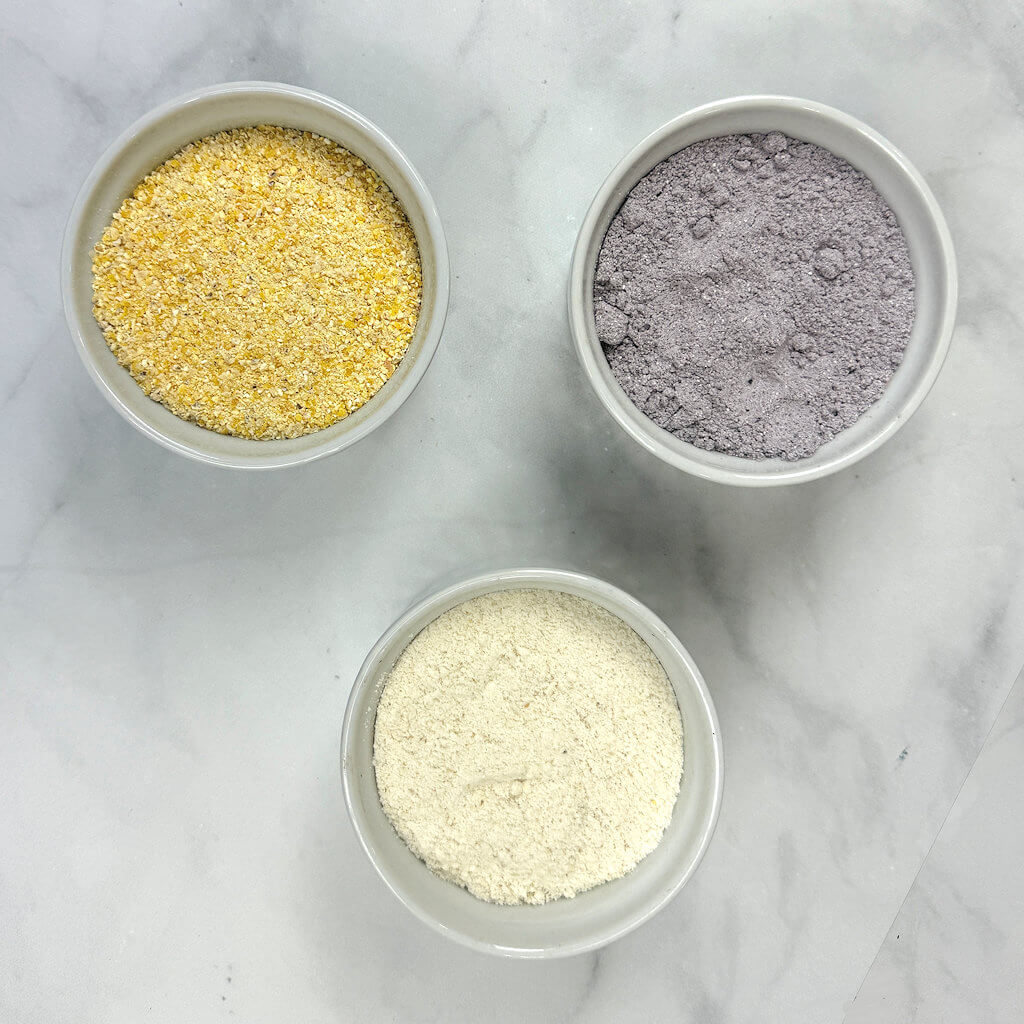
The core distinction is texture and processing. Cornmeal is ground whole corn kernels; coarse, gritty, and full of flavor, the base of cornbread and grits. Corn flour takes that grinding further until the texture resembles standard wheat flour; fine, smooth, and used for coatings and batters. Cornstarch is something else entirely: not ground from the whole kernel but extracted from the starchy endosperm only, leaving a flavorless white powder used exclusively for thickening and creating a crispy surface when frying. Three different products, three different purposes, and generally, no easy ways to substitute one for another, without textural changes.
The confusion deepens across borders. In the UK, “cornflour” (one word) is what Americans call cornstarch. “Corn flour” (two words) in the US is finely ground corn. “Maize flour” in the UK is the same as US corn flour. And “Maizena”, a brand name used across several countries, is what Americans call cornstarch. If you have ever wondered why a recipe did not turn out the way it should, the answer may have been right there in the ingredient list all along.
Last but not least, there is the confusing mix of words that refer to dishes and/or ingredients. A good example of that confusion is cornmeal, polenta, and grits. They are often used interchangeably, but they are not the same thing, and understanding the distinction makes a real difference in the kitchen.
This post may contain affiliate links, which means that I make a small commission off items you purchase at no additional cost to you.
Cornmeal, Polenta and Grits. Are They Interchangeable?
No, they’re not. Cornmeal is an ingredient; polenta is an Italian dish and grits a staple dish in the Southern United States. Many use these terms interchangeably. Polenta refers to cornmeal, most of the time yellow cornmeal. Most Southerners make grits with white cornmeal instead of yellow.
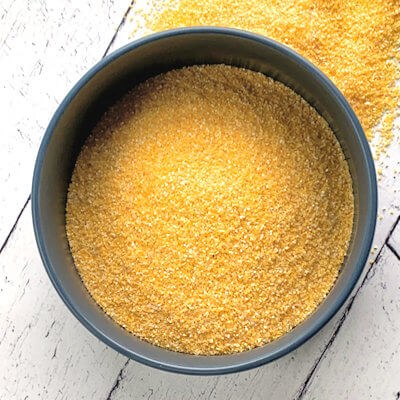
This is yellow cornmeal, sold as medium grind polenta.
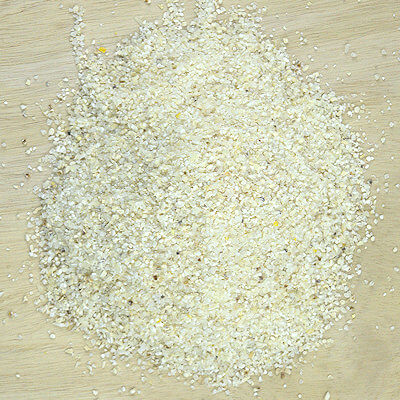
This is an example of stone ground white cornmeal, sold as grits.
Cornmeal, Corn Flour and Cornstarch. Is There a Difference?
Yes, there is a difference. Even though, all three are made from corn, cornmeal, corn flour, and cornstarch differ in texture, flavor, and use/characteristics. By the way, did you know that corn is considered a fruit (botanically), but it is most commonly referred to as a vegetable or a grain.
What is Cornmeal
Cornmeal is made by grinding whole corn kernels. There are different types of cornmeal depending on the kind of corn (white, blue or yellow).
Yellow cornmeal – this one is coarsely ground. This is the most common type of cornmeal. It is widely available and has the most prominent corn flavor. Perfect for cornbread, cobblers, breading fish, tomatoes, etc.
My light and fluffy cornbread is made with coarse yellow cornmeal.

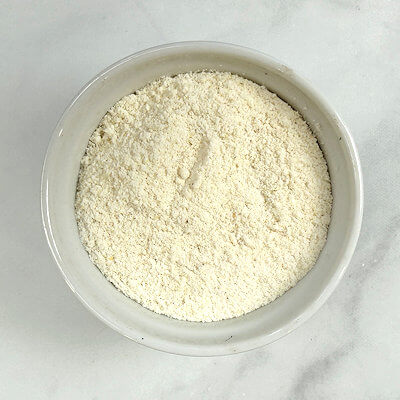
White cornmeal – a finely ground example. This cornmeal obviously is less colorful, but has the most subtle, delicate flavor of the 3 versions. Mostly available in fine grind. It is a perfect alternative for yellow cornmeal, and does very well in savory dishes.
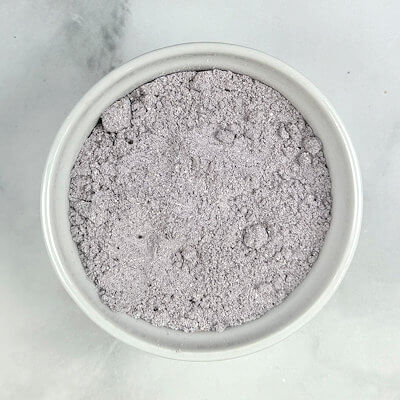
Blue cornmeal – the least known. It has a striking lavender-blue color, a uniquely earthy flavor and is slightly sweeter than yellow cornmeal. This blue corn is derived from Hopi maize, a blue and purple-speckled corn and grown in Mexico, Southeastern and Southwestern US.
Try these blue corn muffins.
Grinds of Cornmeal
Cornmeal comes from drying out corn kernels and crushing them down with a grindstone or metal. A grind stone (water powered or not) typically produces coarse textured cornmeal. Stone grinding is a method where the kernels are ground between 2 stones. This method preserves more of the whole kernel’s nutrients and oils, and its original flavor, resulting in a more nutritious but also more perishable cornmeal due to the higher fat content. It is recommended to keep stone-ground cornmeal in the fridge, once the package is opened. Luckily, the availability of stone-ground cornmeal is improving.
Most store-bought cornmeals are ground with a metal roller, resulting in a smoother and finer texture; medium or fine. These cornmeals are also often degerminated, meaning the nutritious, oily germ and bran are removed in processing. This makes them shelf stable.
If you cannot get you hands on a medium or fine cornmeal, you can always using a blender, or a coffee grinder to produce a cornmeal with your desired texture.
What is Corn Flour
When you grind whole corn kernels as fine as powder, you’ll get corn flour. Flours are used in baking goods, but please be aware that corn flour won’t produce the same rise as those made with wheat flour as it is naturally gluten-free. Here in the South, corn flour is used to coat fried foods, such as shrimp and chicken; it adds a pleasant flavor and a crispy crunch, without the grittiness of cornmeal.
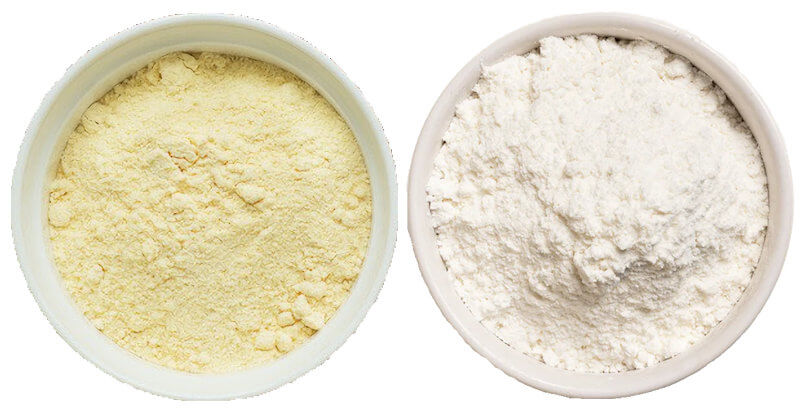
- Corn flour (two words = US spelling) is finely ground kernels. In other words, cornmeal that is ground finer into a flour. In the UK, corn flour is called maize flour.
- Cornflour (one word = British spelling) is what we call in the US cornstarch.
What is Cornstarch
Cornstarch is a made from a flavorless part of the kernel, the endosperm. This is the starchy, nutritive tissue in a corn kernel; a food source for the developing embryo during germination. The starch is extracted from the kernel and dried to form a fine white powder; cornstarch made – an odorless and flavorless powder. It’s basically pure starch; a carbohydrate, without any fiber, protein, fat or other nutrients.
Use cornstarch to thickening sauces, soups, and gravies, but also to create a crispy coating when frying foods. Mix with a cold liquid first to form a smooth slurry before adding it to the hot dish. Cornstarch is also used to make meat in stir-fries more juicy, by coating small pieces of meat in cornstarch and quickly cooking them in a hot wok. Cornstarch can also be used to clean and deodorize.
- Cornstarch is called cornflour in the UK.
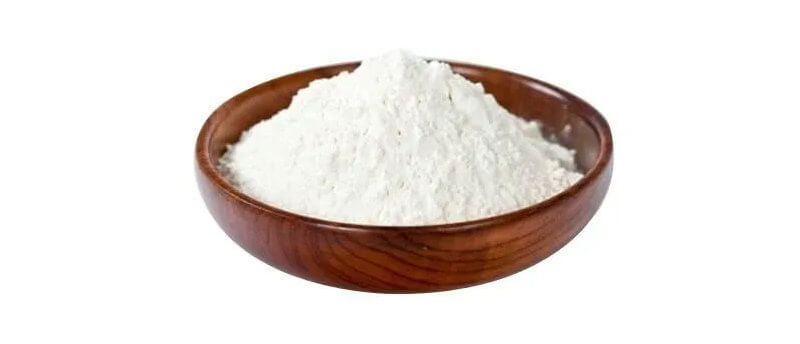
Hominy vs Masa vs Marsa Harina
- Hominy is nixtamalized corn. Nixtamalization means soaking field corn kernels in an alkaline solution (usually lime or lye water). After they are soaked, the hulls are removed from the outside of the kernels, so they can puff up. This makes it easier to grind the kernels down into masa. Hominy is available in white or yellow, in dried from or in cans – ready to use. Hominy’s flavor is rather neutral, which makes it a ideal ingredient for recipes, like stews (pozole), soups, casseroles.
- Masa (or masa de maiz) is a dough made from ground nixtamalized maize. Masa is used to make tamales and tortillas.
- Masa harina is dried masa. After the nixtamalization, the hominy is made into a dough (masa) that is spread into a thin layer, dried and then ground into masa harina. Masa harina is used to thicken dishes, like soups and stews. Add water to masa harina and you’ll have masa.
Masa harina vs Corn flour
- The big difference between masa harina and corn flour is the nixtamalization or soaking process. This process will make the masa harina ideal for making tortillas. Corn flour easily dissolves in water, it lacks the binding quality and thus far from ideal for making tortillas.
One more confusion. Maize, Maizena and Maize flour.
- Maize is used in British English and more frequently used in scientific applications than corn.
- Maizena is a brand name that is used in various countries and is corn starch.
- Maize flour (British term) is what we call corn flour in the US.
Quick Reference Table
| US NAME | UK NAME | TEXTURE | MAIN USE |
| Cornmeal | Maize meal | Coarse to medium | Cornbread, polenta, grits |
| Corn flour | Maize flour | Fine powder | Coatings, gluten-free baking |
| Cornstarch | Cornflour | Very fine powder | Thickening, frying |
| Masa harina | – | Fine powder | Tortillas, tamales |
The short version: cornmeal is for texture and corn flavor, corn flour for coatings and gluten-free baking, and cornstarch for thickening and frying. They are not interchangeable, but once you know what each one does, using the right one becomes second nature. And if you are cooking from a British recipe, check which word they used carefully before you buy anything.
Updated 10.02.25
I’m so confused now, I’ve just find this recipe ‘traditional-pork-carnitas-on-savory-corn-waffle’
And it have all three corn products. Somebody help me
Hello Carmen;
Thank you for your question. Cornmeal and corn flour are both made by grinding whole corn kernels. The difference is the texture or the coarseness if you like. Corn flour is a ground as finely and has a similar texture as all-purpose flour. Cornmeal on the other hand, is less fine, more gritty. Cornmeal is often used to make cornbread. I cannot speak to the recipe on ‘whatisonkatesplate’, but I assume she used both for a reason. To be certain before you buy ingredients or start on a recipe, I would contact her directly. Good luck and I hope your recipe will be delicious.