There are recipes that are made ‘from scratch’ that can be a lot of work, like making your own pasta or baking bread. Making chicken broth from scratch is certainly NOT a lot of work and once you know the basic ‘rules’ you won’t be able to ever go back to the store-bought versions.
What convinced me to make my own chicken broth, is the control I have over the ingredients. Second reason is the fact that most store-bought broths always disappointed me with the lack of flavor, and the excessive use of salt.
Is it Broth or Stock?
In many recipes broth and stock are used interchangeably and I do that myself. Broth and stock are rather similar in ingredients and usage, so if you need a little bit in a recipe, it does not matter what you use. There are however distinct differences:
- Broth – made with animal flesh, with or without bones, plus vegetables, aromatics and seasonings.
- Stock – made from primarily animal bones, vegetables, and aromatics. A stock is cooked for a lot longer than a broth. The bigger the bones, the longer it takes to extract the flavor, so a good chicken stock would cook about 4 to 6 hours.
But when you buy either of these products in a store, have a look at the ingredients list on the label. You would want to know what you’re buying. Sometimes, sugar is added or unspecified flavors, meat instead of bones is used etc. With the risk of confusing you, there are two other products in the market that you may recognize:
- Bone broth – this is the relative new kid on the block and a product that certainly is confusing. The word bone indicates that bones instead of meat are used and that’s indeed the case when you look at the ingredients. But that it would make sense to call it a stock and not a broth. So, I guess bone broth is a ‘marketing’ term and does not follow the long held believed differences between stock and broth.
- Bouillon – this is dehydrated stock or broth, pressed in cubes, powder, and granules, Bouillon is also available in liquid and paste form. They all have a concentrated flavor of chicken, meat or vegetables, but often brands have added a host of other ingredients that contribute to the end flavor, so check this out first.
When you make a broth or a stock yourself, you can decide what goes in it and how much you make; those are for me the biggest advantages. You can decide to make a small batch every time you make a soup, or you can double or quadruple the recipe. You can make this recipe for two and store it in the refrigerator for future recipes. Below are the ingredients I use for the basic version.
This post may contain affiliate links, which means that I make a small commission off items you purchase at no additional cost to you.
Key Ingredients in This Recipe
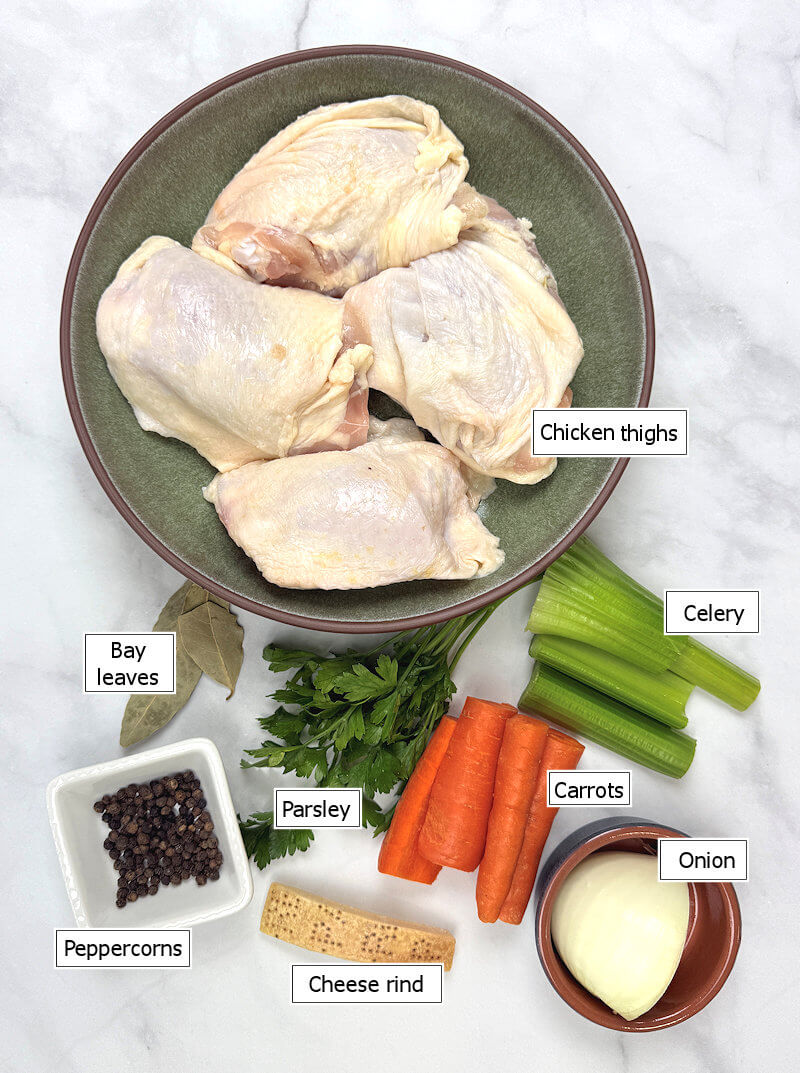
You’ll find the complete list of ingredients and exact quantities in the recipe below.
- Chicken thighs (bone-in, skin on)
- Vegetables
- Celery
- Carrot
- Alliums
- Onion
- Aromatics
- Parsley
- Peppercorns
- Bay leaves
- Cheese rind (optional)
How to Make a Small Batch Homemade Chicken Broth
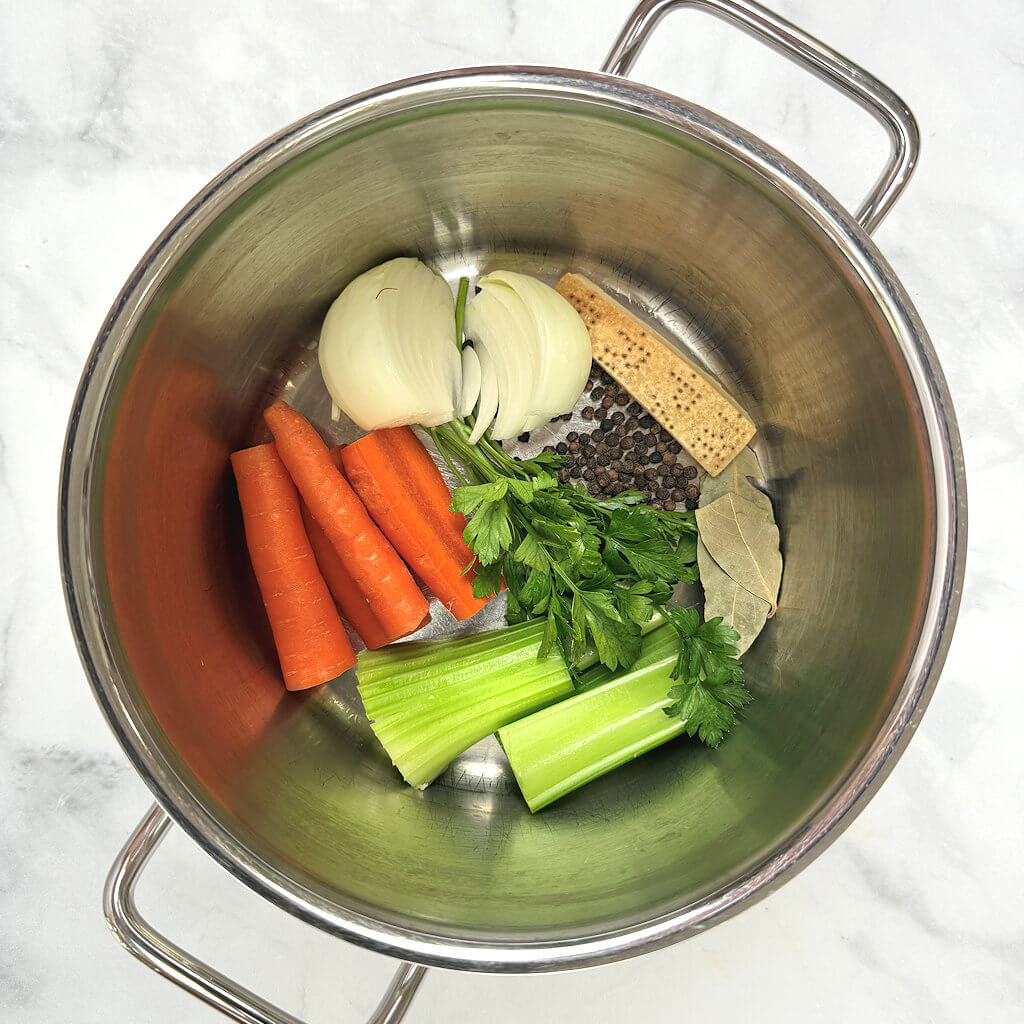
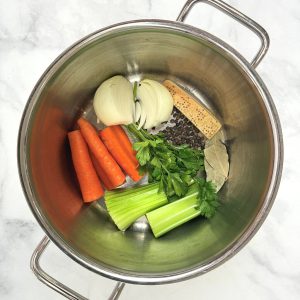
Step 1 – Place clean vegetables, herbs, spices and in a large pot. There is no need to peel anything. The vegetables will be discarded at the end.
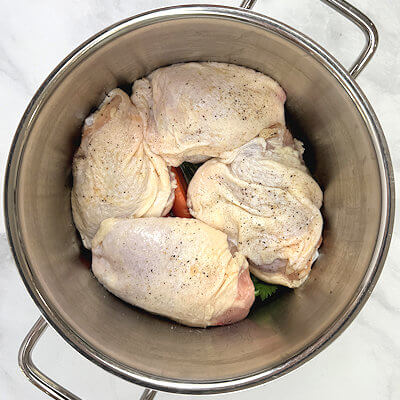
Step 2 – Season the chicken thighs with pepper, and place them on top of the vegetables. Cover the chicken with water so they are just submerged. Bring the pot to a boil quickly, reduce the heat to a simmer and cook for about 3 hours.
- Step 3 – Strain the broth through a sieve and press to get as much liquid extracted from the vegetables and chicken thighs. If you’re not using the broth immediately, cool it down quickly and collect the broth in a container.
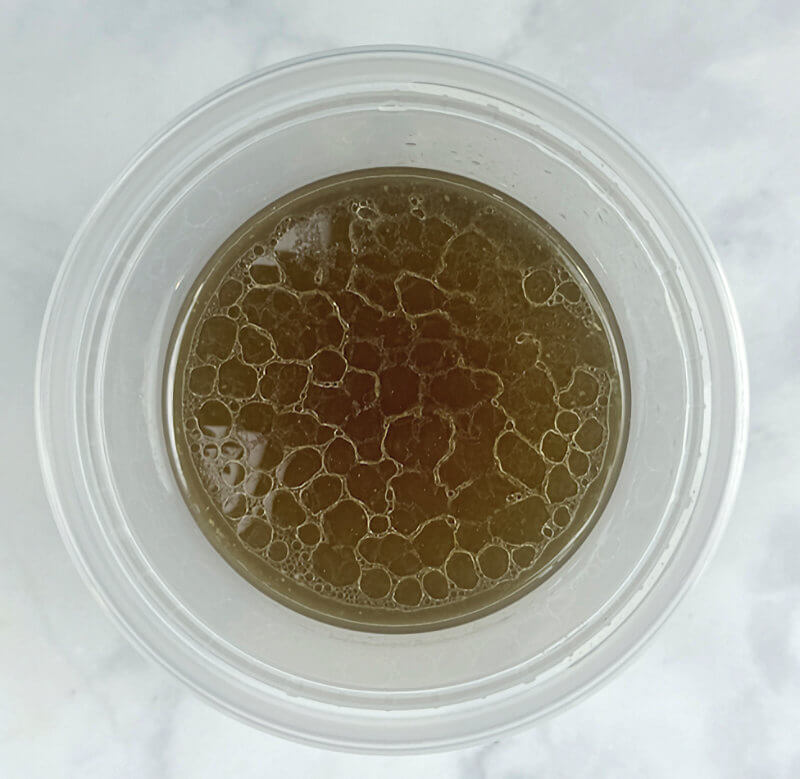
Making a broth or stock does not really require a recipe, as you can basically do what you like, but there are a few ratios will help you get the most out of this valuable liquid.
- The classic ratio for stock is 20 percent of the weight of your bones in vegetables. So, if you’ve two pounds of bones/meat, then add 6 ounces of vegetables, of which 50% is onions and 50% celery and carrots.
If you prefer to ditch classic ratios and like to go on your own, go at it. That’s why I usually do. There is nothing wrong with throwing whatever vegetables you have in your fridge into the pot; think of vegetable scraps, left-over bones from a rotisserie chicken or steak bones etc. There is flavor in all of it. I have to admit that I throw vegetable scraps away, way too often and that I should indeed make broth more frequently from whatever I have on hand.
Alternatives and Substitutes
- Instead of chicken thighs, use drum sticks, wings, legs, breast. Keep skin on and bone in.
- Vegetables – can be celery, carrots, fennel, mushrooms, parsnips, turnips.
- Alliums – can be garlic, onion, scallions, leek.
- Aromatics – think about parsley, thyme, ginger, peppercorns, rind of Parmigiano Reggiano cheese, lemon grass, bay leaves.
- Cooking alternative. Instead of adding water to your vegetables and chicken meat, an alternative option is to sear the chicken meat first. This browning may enhance the flavor of your broth. Please be aware that it will also turn the stock into a darker liquid.
Frequently Asked Questions
First of all, don’t panic. This foam (called scum) is made up of proteins, coming from the meat, not the bones, that coagulate when heated. Scum is harmless, flavorless. It is similar to egg whites that touch a hot liquid, they instantly coagulate. It usually forms when your broth is boiling, rather than simmering. Once it is there, it won’t go away unless you remove it. The only real reason to remove the sum is for aesthetics; scum makes your broth cloudy. If you want a clear broth remove it with a slotted spoon or even better with a fine mesh sieve or skimmer, or a slotted spoon with a cheese cloth on top.
The left-over chicken meat is not particular flavorful, and can be a little rubbery. We didn’t season it other than rubbing with some pepper and cooking it in water with vegetables and herbs. Most people will discard it, but I believe it can still be used in dishes that will involve a lots of flavors. Shred it would help getting the flavors everywhere. Think of dishes like stews, tacos, curries, casseroles etc.
First of all, cool it quickly, by placing it in an ice bath.
For refrigeration – Pour the chicken broth in an airtight container and store it for 3-4 days.
For freezing – Pour the chicken broth in an airtight containers (glass or plastic), a Ziploc bags or portion it out in ice cube trays. Label with the date it was made.
When storing in containers, be aware that the broth expands during freezing, so leave al least 1 inch of headspace. When storing in freezer bags, store them flat. This makes them easy to stack in the freezer and easier to thaw.
Label bags or containers with the type of broth and the date it was made.
Keep in freezer for 3-6 months.
Chicken Soup Recipes to Try
- Italian Chicken Soup with Fennel & Zucchini
- Chicken Soup with Potato and White Beans
- Tomato Chicken Pasta Soup
Small Batch Homemade Chicken Broth
Pin Recipe FacebookIngredients
- 2 pounds chicken thighs
- 1 stalk celery
- 1/4 onion
- 1/2 carrot
- 1 teaspoon black peppercorns
- 1-2 dried bay leaves, depending on size
- 3 sprigs parsley
- cheese rind, (optional)
Instructions
- Place clean vegetables, herbs, spices and in a large pot. There is no need to peel anything. The vegetables will be discarded at the end.
- Season the chicken thighs with pepper, and place them on top of the vegetables. Cover the chicken with water so they are just submerged. (NOTE 1)
- Bring the pot to a boil quickly, reduce the heat to a simmer and cook for about 3 hours. When foam forms on the surface of you broth, remove it. (NOTE 2)
- Strain the broth through a sieve and press to get as much liquid extracted from the vegetables and chicken thighs. If you’re not using the broth immediately, collect the broth in a container. (NOTE 3)
Notes
- I personally use as little water as possible, but make sure that everything is submerged. The theory behind it is that if the broth is too concentrated I can always dilute it, by simply adding water. When the broth is too thin in flavor I have to reduce it by cooking it down.
- This foam (called scum) is made up of proteins, coming from the meat, not the bones, that coagulate when heated. Scum is harmless, flavorless. It is similar to egg whites that touch a hot liquid, they instantly coagulate. It usually forms when your broth is boiling, rather than simmering. Once it is there, it won’t go away unless you remove it. The only real reason to remove the sum is for aesthetic reasons; scum makes your broth cloudy. If you want a clear broth remove it with a slotted spoon or even better with a fine mesh sieve or skimmer, or a slotted spoon with a cheese cloth on top.
- First of all, cool it quickly, by placing it in an ice bath.
- For refrigeration – Pour the chicken broth in an airtight container and store it for 3-4 days.
- For freezing – Pour the chicken broth in an airtight containers (glass or plastic), a Ziploc bags or portion it out in ice cube trays. Label with the date it was made. Keep in freezer for 3-6 months.
- When storing in containers, be aware that the broth expands during freezing, so leave al least 1 inch of headspace. When storing in freezer bags, store them flat. This makes them easy to stack in the freezer and easier to thaw.
- Label bags or containers with the type of broth and the date it was made.
Nutrition
Nutrition information is automatically calculated, so should only be used as an approximation.