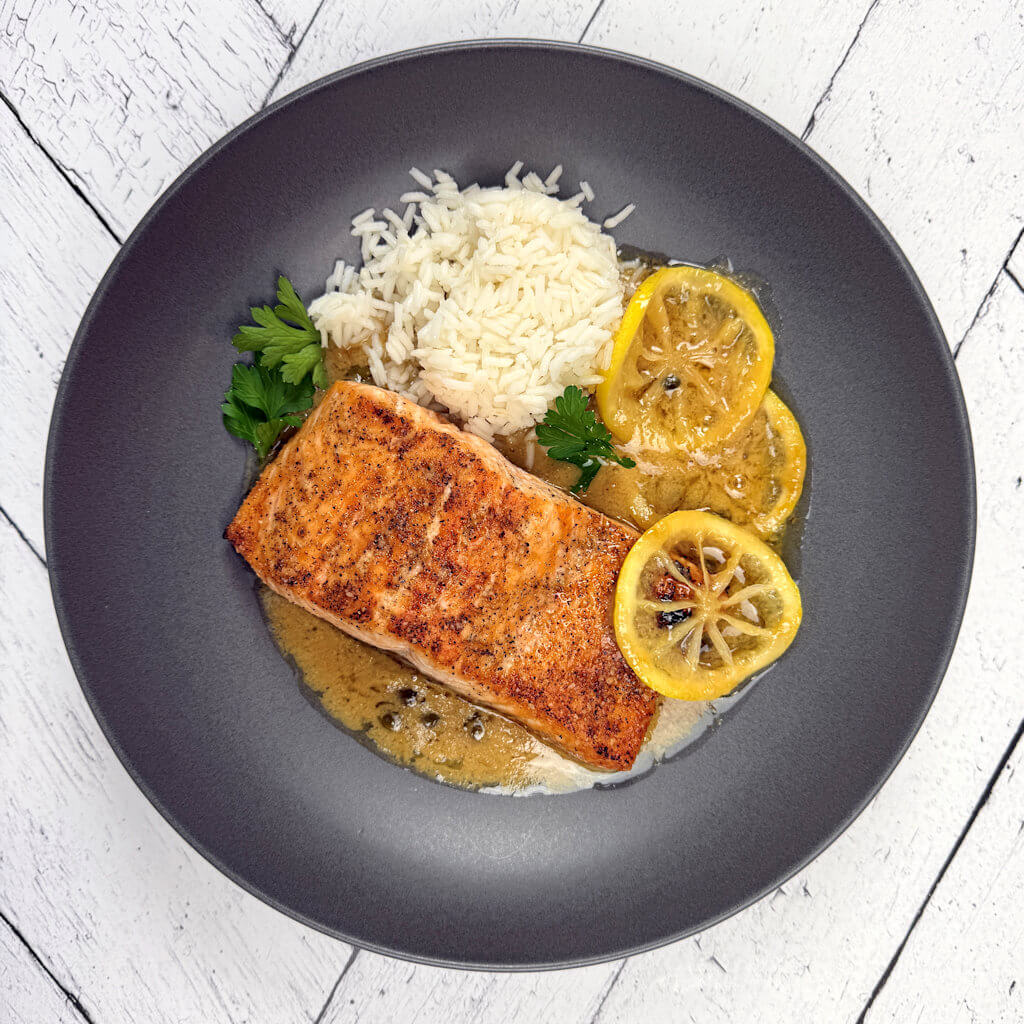
The salmon is cooked under the broiler until just flaky with lightly crisped edges and a caramelized top, keeping the center tender. The sauce comes together separately in a pan, where the miso melts smoothly into the lemony base without interfering with the classic piccata flavor.
The result is a balanced dish that feels both familiar and slightly unexpected. The dish is elegant enough for company, yet quick and straightforward enough for a dinner with your loved one.
This post may contain affiliate links, which means that I make a small commission off items you purchase at no additional cost to you.
Key Ingredients in This Recipe
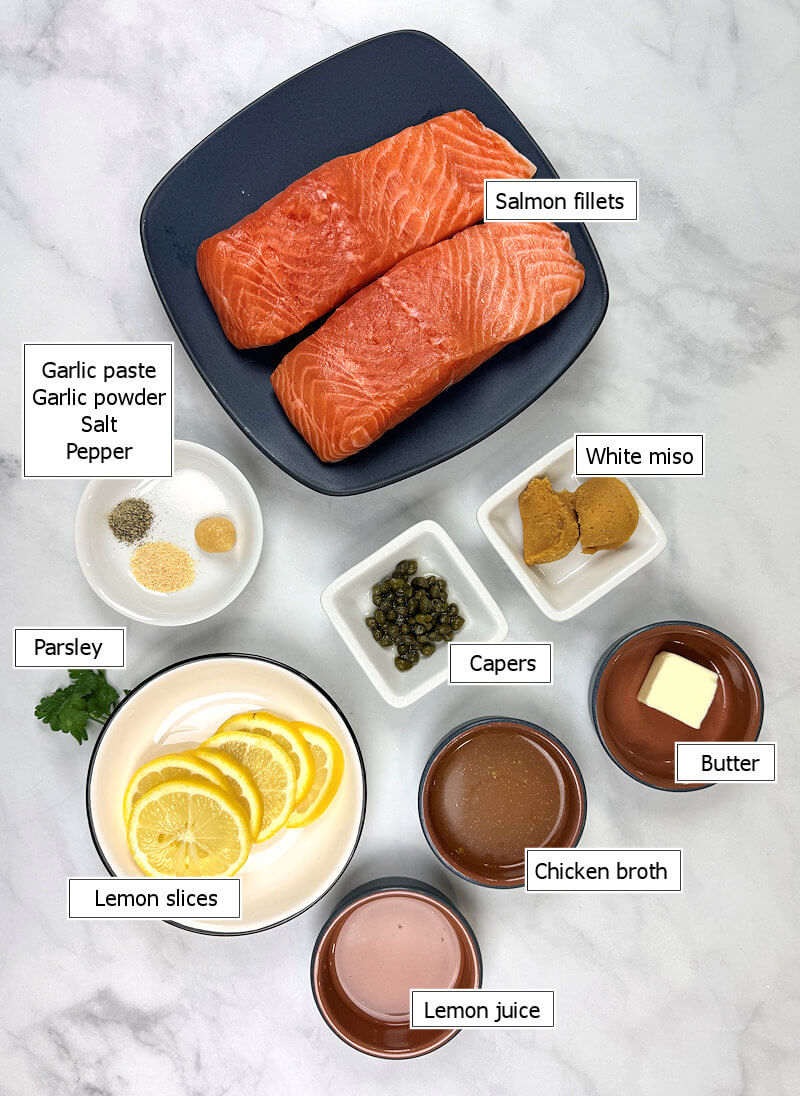
You’ll find the complete list of ingredients and exact quantities in the recipe below.
- Salmon
- Garlic powder
- Butter
- Garlic paste – or fresh garlic
- Chicken broth
- White miso
- Lemon juice
- Lemon slices
- Capers
- Parsley
I cooked the salmon under the broiler, keeping things simple and efficient, no splatter, no fuss, just concentrated heat. The sauce is cooked separately in a skillet and I did that simultaneously, saving a lot of time. This recipe is done in about 15 minutes.
Watch the short video below and/or see the step-by-step directions.
How to Make Salmon Piccata with Miso
Step 1 – Season the salmon fillets with salt, pepper and garlic powder. Then rub with olive oil.
I kept the seasoning basic, as the piccata sauce is the shining star, so hold back on the seasoning.
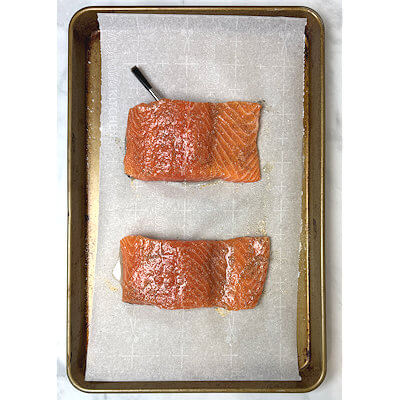
Place salmon on a baking sheet, lined with parchment paper. Place the baking sheet under a broiler and cook for about 6-10 minutes.
I always cook with the Meater and never have an under-cooked or over-cooked piece of fish.
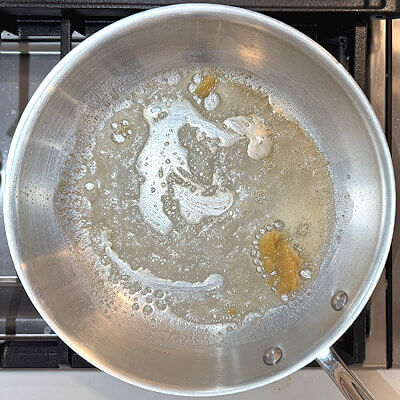
Step 2 – Heat the butter in a pan, stir constantly and add the garlic paste when the butter starts to brown. Stir until the paste is dispersed.
You can use fresh minced garlic as well. I prefer the paste in this recipe as it allows me to have a smooth sauce, not one with tiny pieces of garlic.
Step 3 – Add the chicken broth and the miso and stir over medium high heat until you have a smooth sauce. Don’t boil.
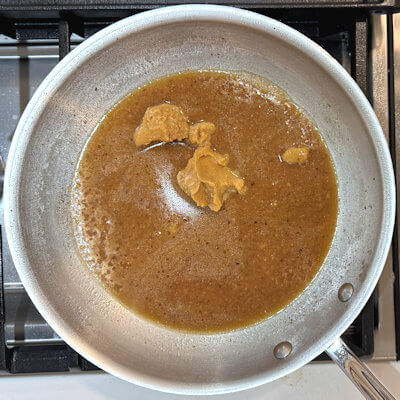
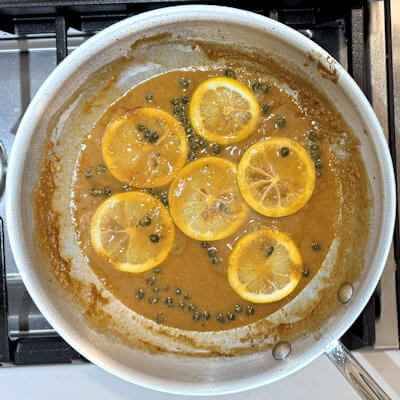
Step 4 – Add the lemon juice, the capers and lemon slices. Stir and allow to warm in the sauce.
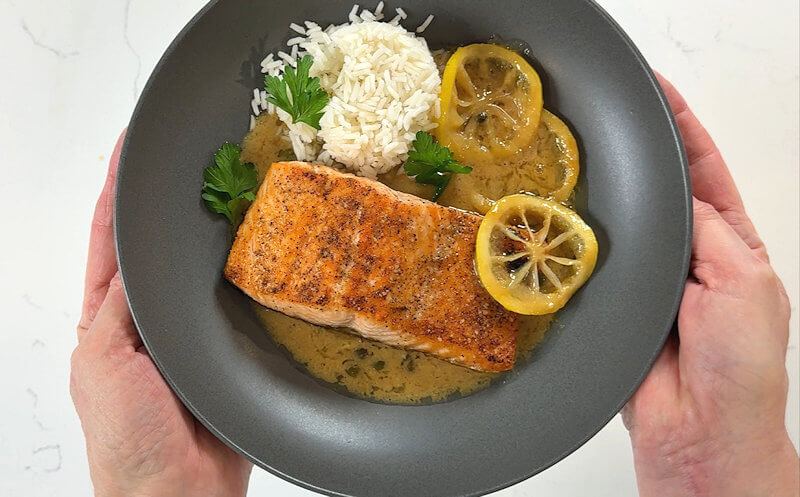
- Now it’s time to put the two together. Pour the piccata sauce on two plates or in bowls. Place the salmon in the sauce, dress it up with some rice (or another serving of starch, like pasta, potatoes or bread), the lemon slices and parsley.
- Enjoy !
Other Salmon Recipes to Try
- Creamy Kale and Salmon in Orzo
- Broiled Teriyaki Salmon with Udon Noodles
- Harissa Grilled Salmon with Squash Quinoa
Salmon Piccata with Miso for Two
Pin Recipe FacebookIngredients
- 12 ounces salmon, skin on
- 1 teaspoon garlic powder
- salt & pepper
- 1 tablespoon olive oil
- 1/4 cup butter
- 1 teaspoon garlic paste
- 1/2 cup chicken broth
- 2 tablespoons white miso
- 1 tablespoon lemon juice
- 1 tablespoon capers
- 1 lemon, in slices
- parsley
Instructions
- Season the salmon fillets with salt, pepper and garlic powder. Then rub with olive oil.
- Place salmon on a baking sheet, lined with parchment paper. Place the baking sheet under a broiler and cook for about 6-10 minutes. (NOTE 1)
- Heat the butter in a pan, stir constantly and add the garlic past when the butter starts to brown. (NOTE 2)
- Stir until the paste is dispersed. (NOTE 3)
- Add the chicken broth and the miso and stir over medium high heat until you have a smooth sauce. Don’t boil the mixture.
- Add the lemon juice, the capers and lemon slices. Stir and allow to warm in the sauce.
- Pour the piccata sauce on two plates or bowls. Place the salmon in the sauce, dress it up with some rice (or another serving of starch, like pasta, potatoes or bread), the lemon slices and parsley.
Notes
- I always cook with the Meater and never have an under-cooked or over-cooked piece of fish.
- The butter is still foaming a lot, but once you see the butter starts browning, add the garlic paste.
- You can use fresh minced garlic as well. I prefer the paste in this recipe as it allows me to have a smooth sauce, not one with tiny pieces of garlic.
Nutrition
Nutrition information is automatically calculated, so should only be used as an approximation.